

I. Service Scope:
After-sales service for entrance and exit equipment mainly includes the following:
1. Equipment Repair: Inspection, repair, and replacement of faulty parts to ensure normal operation of the equipment.
2. Equipment Maintenance: Regular maintenance of the equipment, cleaning internal and external components to extend the equipment’s lifespan.
3. Equipment Upgrade: Providing equipment upgrade services according to customer needs, including hardware and software upgrades to meet evolving customer requirements.
4. Equipment Training: Providing training to customers on equipment use and maintenance, enabling them to operate the equipment proficiently and promptly identify and resolve equipment malfunctions.
5. Equipment Warranty: Providing warranty service for the equipment. Free repair or replacement service is provided for equipment malfunctions occurring within the warranty period.
II. Service Process:
1. Customer Contact: Customers contact our after-sales service center by phone, email, or online, explaining the equipment malfunction or their needs.
2. Fault Diagnosis: After receiving the customer’s repair information, the after-sales service center conducts a preliminary diagnosis based on the fault description and decides whether to dispatch an engineer for on-site service or require the customer to bring the equipment to the after-sales service center.
3. On-site engineer service: Based on customer needs and equipment malfunction, we will arrange for an engineer to provide on-site service. The engineer will troubleshoot and repair the equipment according to the on-site situation to ensure that the equipment is restored to normal operation.
III. Providing Diverse After-Sales Service Options
Remote Technical Support: Utilizing communication methods such as telephone and the internet, we provide customers with technical consultation, fault diagnosis, and solutions. This method allows for rapid response to customer needs and reduces service costs.
On-site Service: For problems requiring on-site resolution, we dispatch technicians to the customer’s location for equipment inspection, fault diagnosis, and repair. This requires service personnel to possess a high degree of professionalism and flexibility.
Return to Manufacturer for Repair: For some complex or serious problems, it may be necessary to send the equipment back to the manufacturer for repair. The manufacturer should ensure the efficiency and quality of the repair process.
Exchange and Return Service: If a product has quality problems or cannot be repaired, we should provide customers with exchange or return services. This helps maintain customer trust and satisfaction.
V. Continuously Improve After-Sales Service Processes and Quality
Customer Feedback: Establish a customer feedback mechanism to collect customer opinions and suggestions in a timely manner. This helps identify problems and continuously improve the quality of after-sales service.
Data Analysis: Analyze after-sales service data to summarize the types, frequency, and effectiveness of solutions to problems. Through data analysis, potential problems and opportunities for improvement can be identified, thereby optimizing after-sales service processes and quality.
Installation
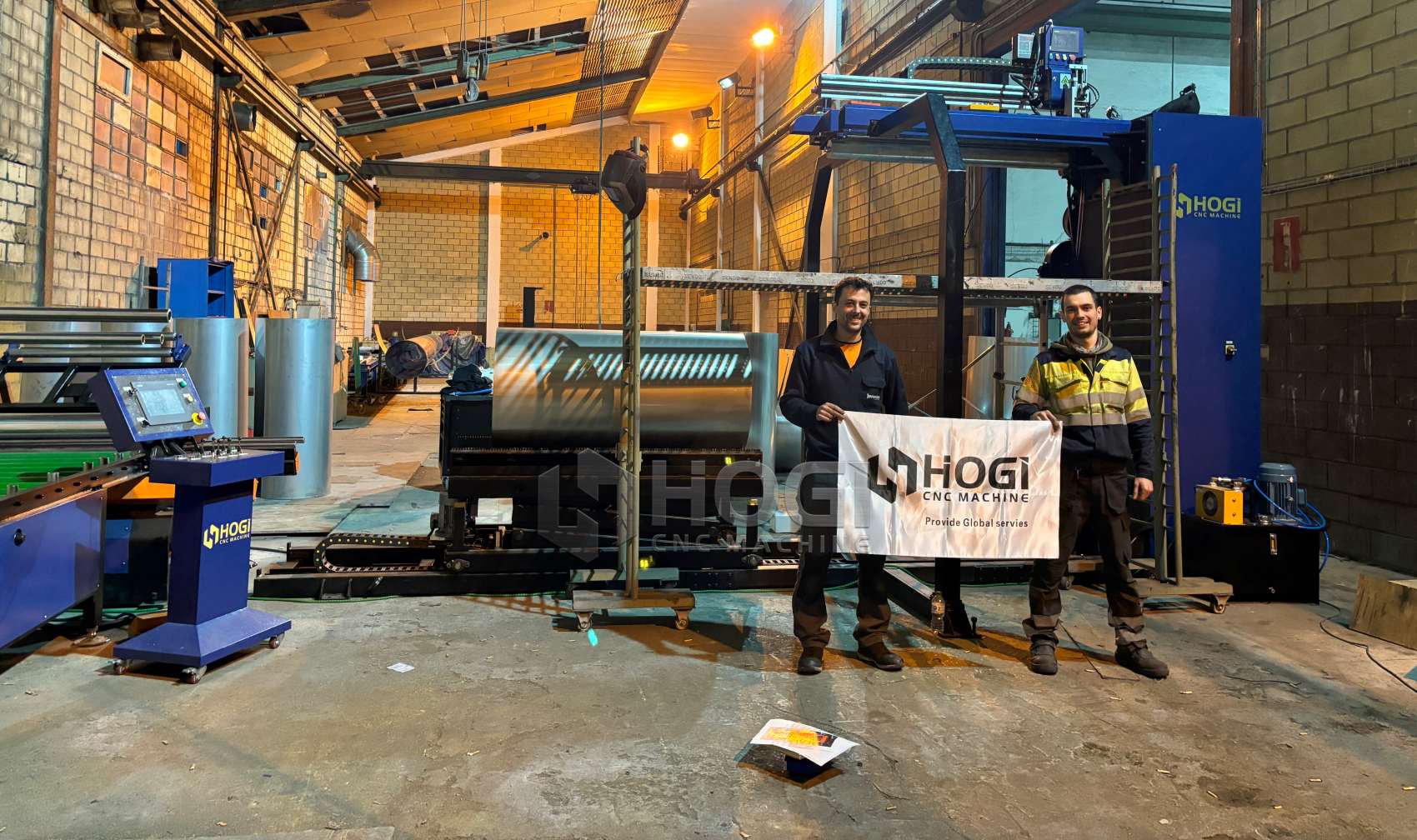
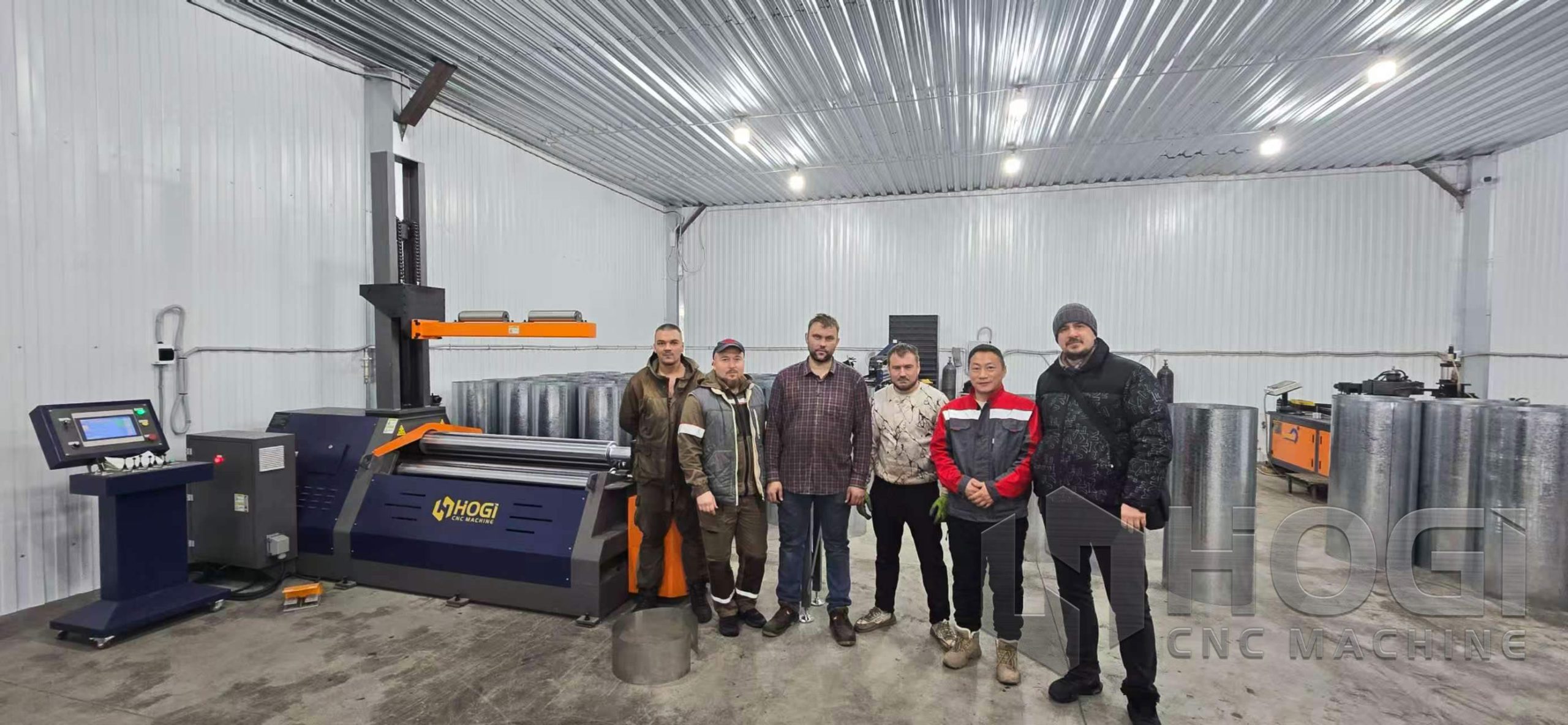
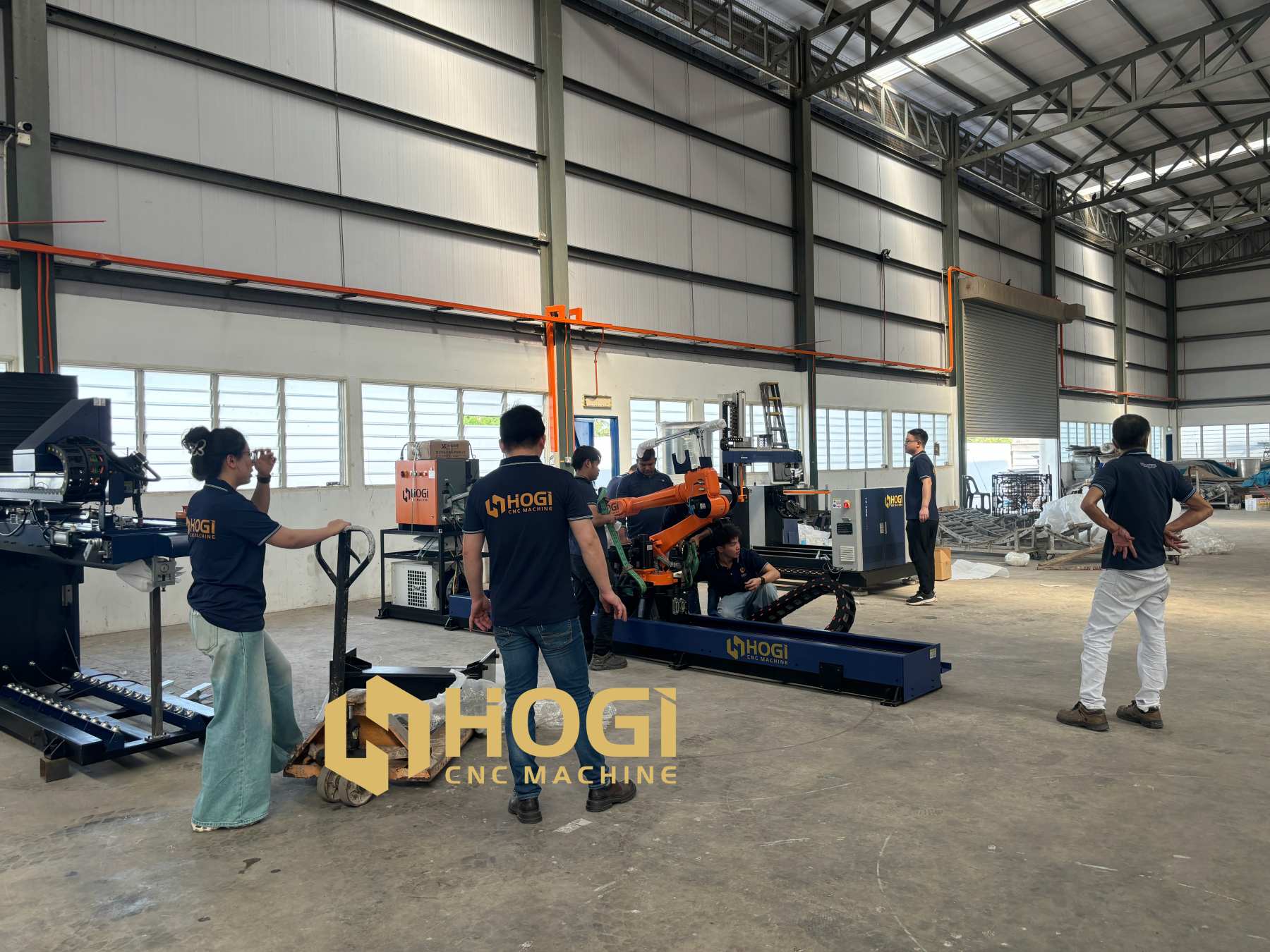
Anyone who bought machines from HOGI can get installation service anytime once he receives the machines, HOGI has a strong installation team who works for customers from all over the world. Our engineers all have much experience in the service for foreign customers, they have served in more than 30 countries. They have assembled many machines, like CNC press brake, Automatic Panel Bender, CNC 4 Roller plate rolling machine,Longitudinal seam welding machine,Laser welding machine, Laser cutting machine and Automatic Production line other metalworking machines.
Before installation service, customers should prepare the requisites in advance, like hydraulic oil, cables, metal sheets, rulers etc. It will largely shorten the installation time and let all the process go well.
Regarding the cost, customer will only assume the airfare and accommodation for every engineer.
The installation process will include the following jobs: Filling hydraulic oil in the machine tank, connecting the cables, checking all tube connections and starting the machine and running the machine in right conditions.
Debugging
Debugging is also the very important part for the after-sales service. When customer receives the machines, maybe the machine can enter the working conditions, but they can not make the products by the machine for customers. Our experienced technicians are well eauipped to facilitate the commissioning process. They will help customer to set the relevant parameters into the controller system according to the product size. After that, our technicians will try out the machine until the final product is finished. Our engineer will make sure the machine working well and all the settings will be in proper way.
Training
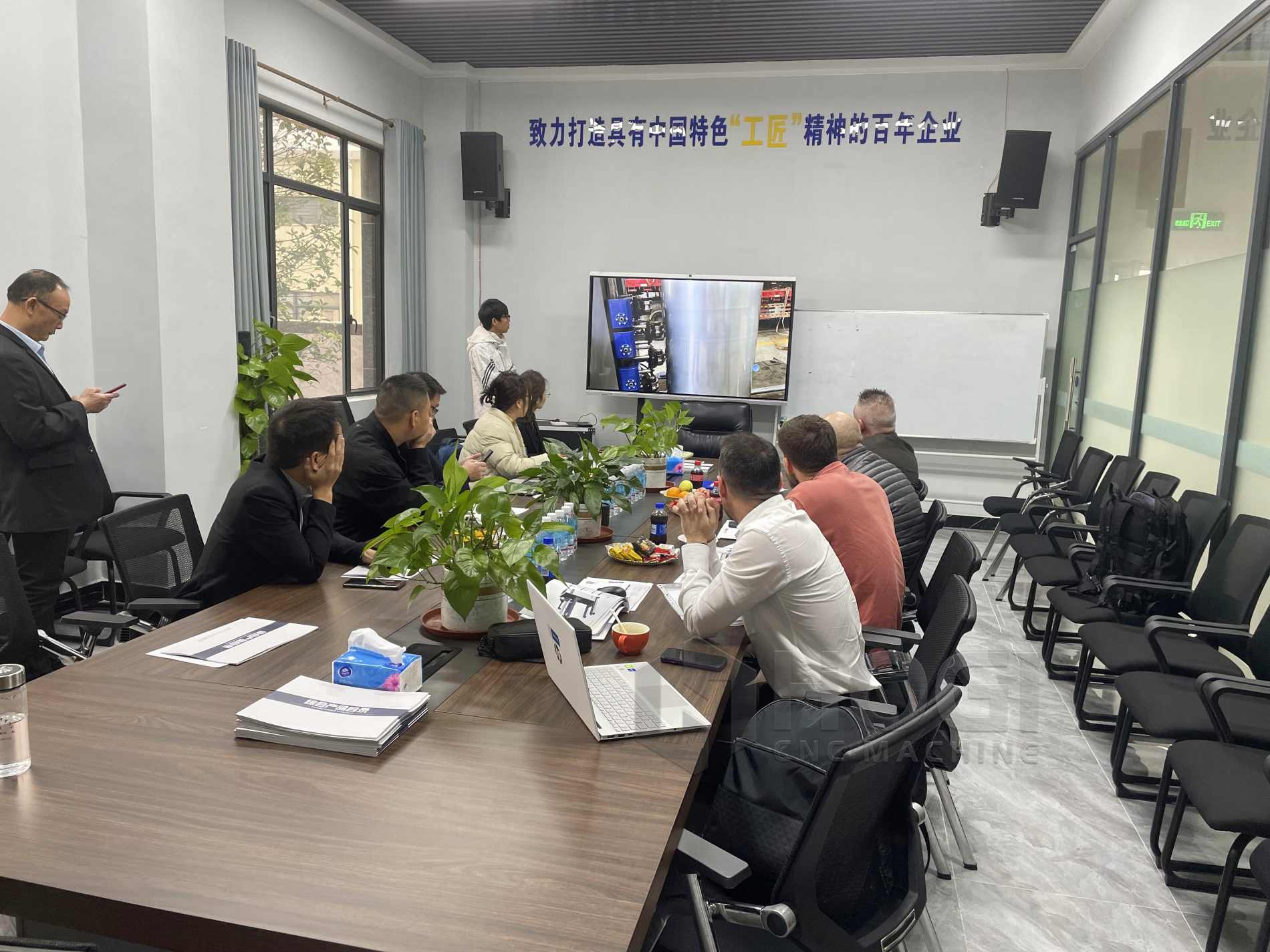
Provide user training services according to the product training program, including product installation, configuration, operation and application case demonstration, and provide relevant training materials. All training courses are taught by technical staff with good theoretical knowledge and rich practical experience.
HOGI is structured to ensure customers of an efficient and professional training service thanks to the preparation and many years of experience of its technicians and of all the technical staff that represent it in the world.
Repair
During the warranty period, HOGI complies with the Maintenance Services Terms and Conditions and the Limited spare parts Warranty Terms and Conditions to provide free repair services for HOGI related products.
During the warranty period, if the machine spare parts are broken expect human damage, HOGI will send the relevant parts to customer for free. Otherwise, customer should pay for the relevant cost. If the machine problem can not be solved by clients, HOGI will ask local dealer to assist and solve the problem, our service center will provide 24*7 hours per week and online service for HOGI machines users from all over the world.
Our experienced technicians are well equipped to facilitate the diagnostic process. Simple machine problems may be diagnosed over the phone, while complicated situations often require a technician on site to work over the equipment and inspect multiple components for the damage or malfunction. Once the damage has been assessed, a restoration plan is proposed.
Service Method
During the warranty period, HOGI complies with the Maintenance Services Terms and Conditions and the Limited spare parts Warranty Terms and Conditions to provide free repair services for HOGI related products.
During the warranty period, if the machine spare parts are broken expect human damage, HOGI will send the relevant parts to customer for free. Otherwise, customer should pay for the relevant cost. If the machine problem can not be solved by clients, HOGI will ask local dealer to assist and solve the problem, our service center will provide 24*7 hours per week and online service for HOGI machines users from all over the world.
Our experienced technicians are well equipped to facilitate the diagnostic process. Simple machine problems may be diagnosed over the phone, while complicated situations often require a technician on site to work over the equipment and inspect multiple components for the damage or malfunction. Once the damage has been assessed, a restoration plan is proposed.


E-mail support service
E-mail service support is available 24 hours per day, 365 days per year.
E-mail: hogi@hogimachine.com

Video Service
We can set up WhatsApp and WeChat groups with our engineers to resolve after-sales issues online anytime.
The customers’ technicians can keep in touch with our engineer at any time,through wechat/whatsapp/mobile phone or email,Our engineer will help to solve your problems as soon as possible.

On-site support service
When necessary, the company will send experienced technical engineers to the site to provide services to users. The company’s technical engineers will be in the user’s environment, experience the system’s operating conditions in detail, communicate face-to-face with users, and conduct reliable and effective fault prediction, problem tracking, abnormal troubleshooting, and system optimization.