
In today’s era of smart manufacturing sweeping across the globe, the metal processing industry is undergoing a profound transformation. Traditional bending processes rely on manual operation, resulting in low efficiency, poor accuracy, and safety hazards. However, the emergence of robotic automatic bending machine manufacturers, by integrating industrial robots, intelligent control systems, and precision mechanical technology, provides the industry with efficient, precise, and safe solutions. These companies not only drive the automation upgrade of metal processing but also become important players in the field of intelligent equipment. #hogipressbrake
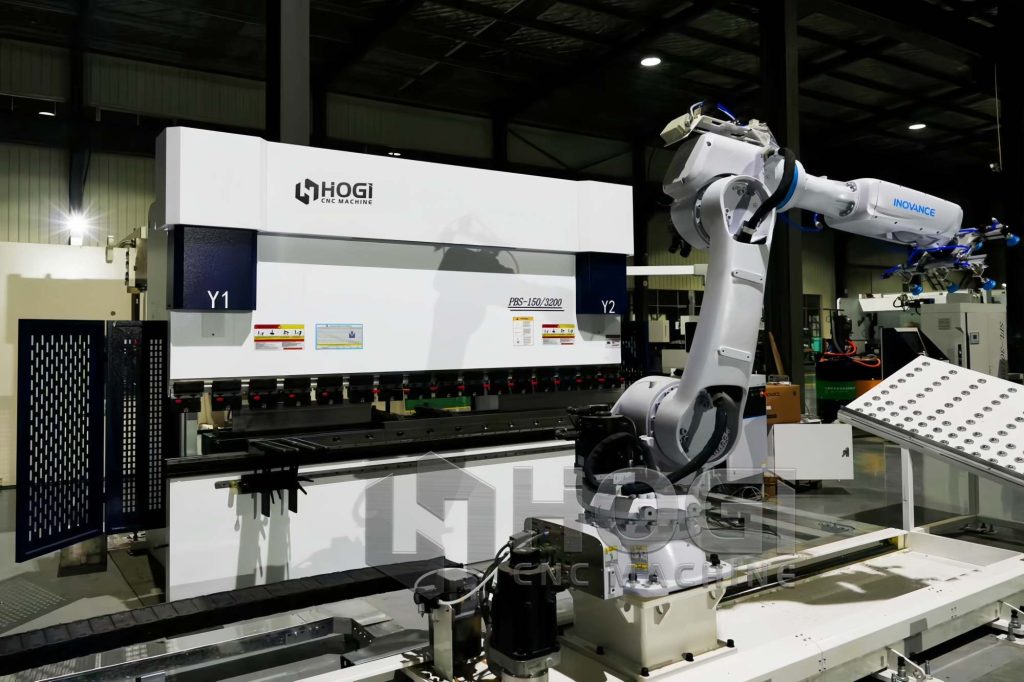
The Core Advantages of Robotic Automatic Bending Machines
Compared to traditional equipment, robotic automatic bending machines offer advantages in three key areas:
1. Significant efficiency improvement. Industrial robots can operate continuously for 24 hours, processing 5-8 times the volume of work compared to manual labor, and without requiring rest time, significantly shortening production cycles;
2. Precise accuracy control. Through laser positioning, force feedback systems, and closed-loop control algorithms, the equipment can achieve bending accuracy of ±0.1mm, meeting the stringent requirements for components in fields such as aerospace and new energy vehicles;
3. Reduced safety risks. Robots replace manual labor in high-intensity and high-risk operations, avoiding work-related injuries caused by fatigue or errors, while also reducing reliance on skilled workers and alleviating labor shortages in the industry.
Technological Breakthroughs: From Standalone Machines to Comprehensive System Upgrades
The technological evolution of HOGI’s fully automated bending machines can be divided into three stages: the initial stage focused on single-machine automation, using robotic arms to replace manual handling of sheet metal; the intermediate stage introduced visual recognition and path planning technologies to achieve flexible production of multiple varieties and small batches; and the current stage focuses on system integration and intelligence. For example, some companies have built digital twin platforms to feed equipment operating data to the cloud in real time, using AI algorithms to optimize process parameters and increase production efficiency by another 30%; other companies have developed modular designs, allowing the equipment to quickly adapt to different specifications of bending molds, shortening changeover time to less than 10 minutes. These technological breakthroughs have transformed fully automated robotic bending machines from simply “replacing manual labor” to “creating value.”
Application Scenarios: “Sheet Metal Processing Tools” Covering the Entire Industrial Chain
The application of fully automated robotic bending machines has permeated the entire metal processing industry chain: In the automotive manufacturing sector, it can efficiently complete the bending of body panels and chassis brackets, contributing to the lightweighting of new energy vehicles; in the home appliance industry, by linking with stamping and welding processes, it enables the fully automated production of air conditioner outdoor units and refrigerator doors; in the architectural curtain wall field, its high-precision processing capabilities can meet the customized needs of irregularly shaped aluminum panels and stainless steel components. Even more noteworthy is that with the popularization of 3D printing technology, fully automated robotic bending machines are complementing additive manufacturing – the former responsible for the rapid prototyping of complex structures, and the latter completing high-precision surface treatment, jointly driving metal processing towards a “design-manufacturing integration” direction.
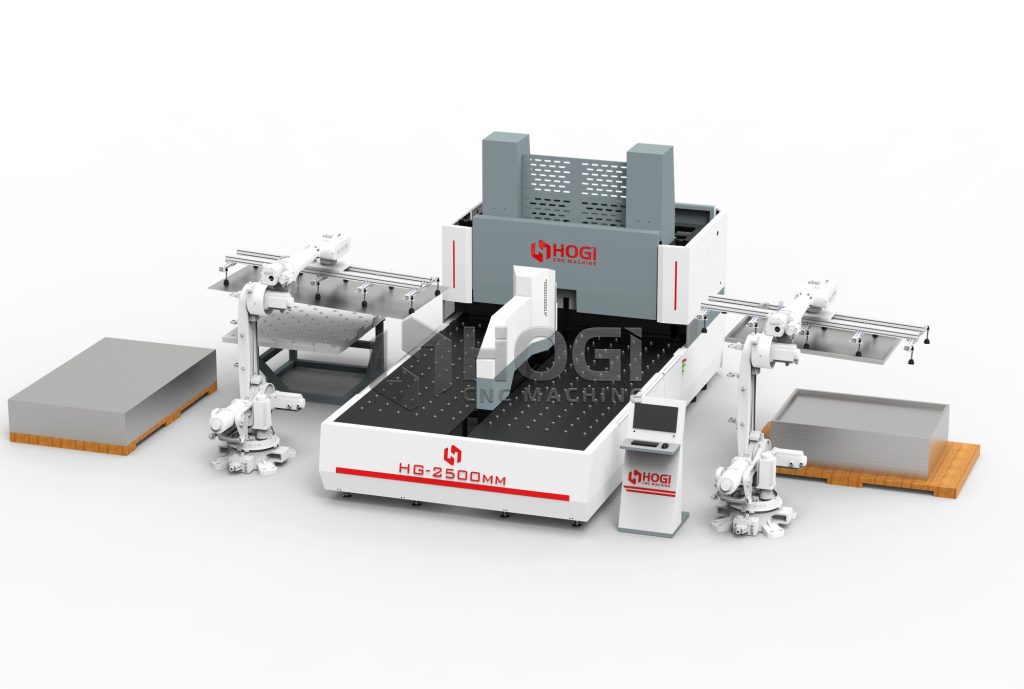
Basic Concepts and Working Principles of Hogi CNC Bending Machines
hogi CNC bending machine is modern piece of equipment that uses a computer numerical control (CNC) system for bending metal sheets. It can be considered an upgraded version of traditional bending machines, achieving high-precision and high-efficiency processing through program control. After inputting specific bending parameters, the CNC system automatically calculates the required movements and precisely controls the machine’s actions, thereby achieving accurate shaping of the metal sheet.
In terms of working principle, CNC bending machines primarily rely on a combination of servo electric systems and hydraulic systems, resulting in smoother and more efficient bending operations. This working principle not only increases processing speed but also allows for the application of force to the material in multiple dimensions, adapting to metal sheets of varying thicknesses and materials. Combined with automation technology, CNC bending machines can automatically complete a series of processes from feeding and positioning to final forming, significantly reducing manual intervention and operational errors.
Through these advanced technologies, we can clearly see the value of CNC bending machines in the production process. They not only improve production efficiency but also help meet increasingly demanding market needs. Building on this, we will further explore the impact of automation on CNC bending machines, focusing on improving processing accuracy and reducing labor costs – key factors driving innovation in the manufacturing industry.
The Impact of Automation on CNC Bending Machines
With the continuous development of automation technology, the application of CNC bending machines has become increasingly widespread, significantly improving processing accuracy and production efficiency. We have found that, through automated control systems, CNC bending machines can complete complex processing tasks in a short time, not only reducing errors in data processing but also improving consistency during the processing process. This means that our manufacturing industry can respond to market demands more quickly, optimize production plans, and effectively shorten product delivery cycles.
At the same time, labor costs and operational risks have also been effectively reduced. With technological breakthroughs in the field of automation by leading brands such as Hogi, we no longer rely on a large amount of manual labor to operate and monitor the machines. This not only reduces the workload of employees but also lowers the risk of accidents caused by improper operation. Less human involvement makes the production environment safer and allows us to achieve a higher return on investment in equipment. Therefore, the significant impact of automation on CNC bending machines is not only reflected at the technical level but also brings comprehensive innovation and new impetus for sustainable development to our manufacturing industry.
Future Outlook: Builders of the Intelligent Ecosystem
With the advancement of Industry 4.0 and the “dual carbon” goals, manufacturers of robotic automatic bending machines are facing new opportunities and challenges. On the one hand, the application of technologies such as 5G and edge computing will drive equipment upgrades to a “cloud-edge-end” collaborative model, enabling remote operation and predictive maintenance; on the other hand, the demand for green manufacturing requires companies to optimize equipment energy consumption, for example, by replacing traditional hydraulic systems with servo motors, resulting in annual electricity savings of over 20,000 kilowatt-hours per machine. It is foreseeable that future robotic automatic bending machines will not only be processing tools but also intelligent nodes connecting design, production, and logistics, helping the manufacturing industry build an efficient and low-carbon digital ecosystem.
From replacing manual labor to creating value, from single machines to intelligent systems, manufacturers of robotic automatic bending machines are redefining the future of metal processing through technological innovation. For manufacturing professionals, embracing this transformation is not only key to enhancing competitiveness but also a crucial opportunity to participate in the industrial upgrading of the intelligent era. Why not start by learning about a robotic automatic bending machine and explore the unlimited possibilities of intelligent manufacturing. #robotbending