
Traditional hydraulic servo press brakes suffer from numerous issues, such as frequent failures of wear-prone components like cylinders, pumps, valves, and seals, along with lengthy, technically demanding troubleshooting processes. Additionally, contamination within hydraulic systems is difficult to avoid, posing challenges for cleaning and potentially causing adverse environmental impacts. To address these challenges, Nanjing HoGi CNC Machine Technology Co., Ltd. (referred to as “HOGI”) has introduced a newly designed and manufactured all-electric servo press brake (as shown in Figure 1). This press brake simplifies the transmission system by eliminating complex components like hydraulic cylinders, pumps, valves, seals, and oil lines, significantly reducing failure rates. Maintenance costs are virtually zero, requiring only periodic lubrication to ensure efficient, high-precision bending performance. Furthermore, performance comparisons between the all-electric servo press brake and hydraulic servo press brakes of equivalent tonnage demonstrate significant advantages. #minipressbrake #electricpressbrake
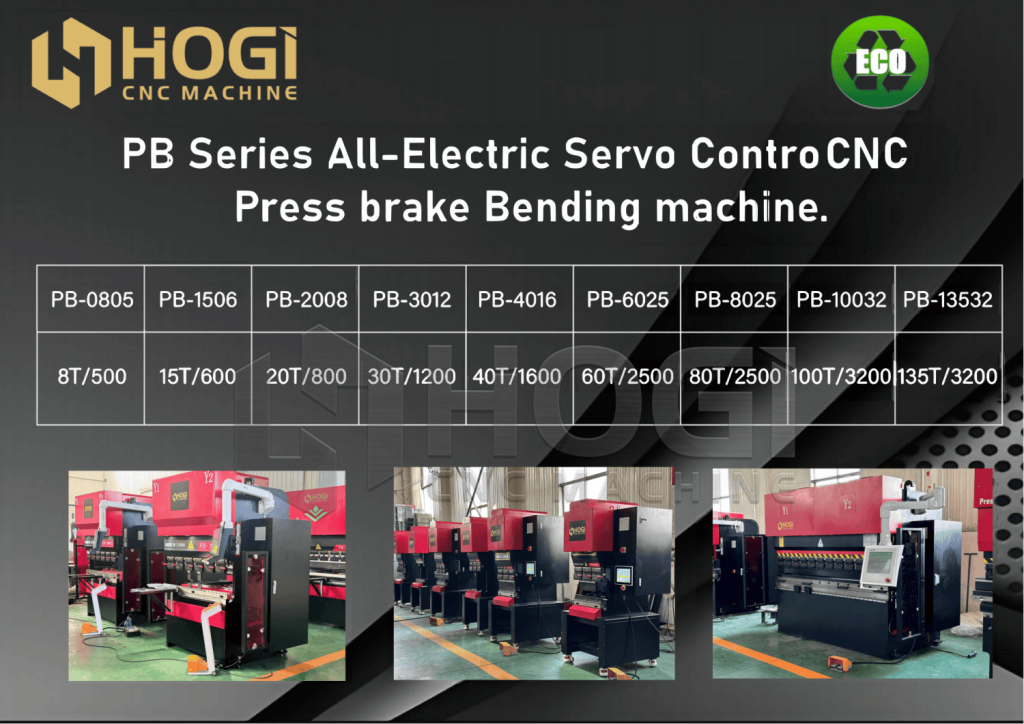
Figure 1 demonstrates the exceptional performance of HOGI’s all-electric servo press brakes. Their servo motors deliver significantly faster response times than hydraulic servo systems. For instance, a 100-ton, 3.1-meter all-electric servo press brake achieves ram return and rapid descent speeds of up to 140 mm/s, with a working speed range of 0 to 50 mm/s. In contrast, hydraulic servo press brakes of the same tonnage typically have ram return and rapid descent speeds below 120 mm/s, with working speeds limited to just 10 mm/s. Furthermore, the all-electric servo press brake features fewer components, resulting in an extremely low failure rate. This design completely eliminates the malfunctions common in hydraulic servo press brakes caused by environmental factors and hydraulic system overheating.
In terms of processing efficiency, all-electric servo press brakes of the same tonnage also significantly outperform hydraulic servo press brakes. Taking a 100-ton, 3.1-meter press brake as an example, the all-electric servo model achieves a maximum bending speed of 34 cycles per minute (at a 10mm opening height) and a minimum speed of 29 cycles per minute (at a 140mm opening height), substantially boosting production efficiency. Particularly during the 140mm rapid descent stroke, the all-electric servo achieves 29 bends per minute, whereas the hydraulic servo manages only 12 bends per minute. During the 10mm rapid descent stroke, the all-electric servo reaches an impressive 34 bends per minute, compared to 21 bends per minute for the hydraulic servo.
Moreover, the high bending precision of all-electric servo press brakes is remarkable. They employ a transmission structure where servo motors directly drive ball screws, coupled with Grating Ruler to achieve fully closed-loop control. This enables transmission and positioning accuracy of ±0.01mm. In contrast, hydraulic servo press brakes operate by using an electric motor to drive an oil pump, with flow controlled by proportional valves. Their precision is slightly lower, typically achieving positioning accuracy of ±0.03mm.
Additionally, fully electric servo drive technology delivers significant energy-saving and environmental benefits. The motor’s input power is directly proportional to the load power. During standby, the motor remains stationary with negligible power consumption. Operational noise levels are substantially lower than those of hydraulic servo press brakes. For example, a 100-ton, 3.1-meter servo press brake consumes only 1.5 kWh of electricity, whereas a hydraulic servo press brake consumes 7 kWh.
The mechanical main drive efficiency of all-electric servo press brakes exceeds 95%, far surpassing the efficiency of hydraulic servo press brakes, which remains below 80%. This disparity becomes even more pronounced as hydraulic system components age and wear, causing significant efficiency declines. Taking a 100-ton, 3.1-meter press brake as an example, operating for 8 hours daily, the main unit of an all-electric servo press brake consumes only 12 kWh of electricity. In contrast, the hydraulic system of a hydraulic servo press brake consumes as much as 56 kWh. This demonstrates remarkable energy savings, reaching approximately 80%.
Additionally, the all-electric servo press brake eliminates the need for hydraulic oil, saving approximately 5,000 yuan annually on average. It also avoids the cumbersome processes of replacing hydraulic oil and disassembling hydraulic components, thereby reducing environmental pollution caused by hydraulic oil leaks and waste oil disposal.
In terms of performance, HOGI all-electric servo press brake delivers outstanding results. Its electrical components are sourced from top domestic brands and comply with international standards, ensuring the equipment’s safety, reliability, and resistance to interference. The enhanced heat dissipation capabilities of the electrical control cabinet further boost the machine’s stability. Compared to hydraulic servo press brakes, the all-electric servo press brake offers faster bending speeds, higher bending precision, greater energy efficiency and environmental friendliness, and lower failure rates at comparable prices. This makes it an ideal solution for customers seeking high-quality equipment.
Additionally, hydraulic servo press brakes may experience wear issues in cylinders and oil circuits after two years of use, whereas all-electric servo press brakes completely eliminate such concerns, resulting in higher residual value.
After adopting HOGI’s all-electric press brakes, a certain international automotive parts manufacturer has seen significant improvements in both bending precision and production efficiency. Specifically, the equipment enables a bending speed of 35 cycles per minute, boosting output capacity by nearly 50% compared to traditional hydraulic machinery. Furthermore, its energy-saving and noise-reduction features have substantially reduced the company’s environmental compliance costs.
Technological Innovations and Advantages of All-Electric Servo Press Brakes
- The Evolution of Bending Machine Drive Methods
In the sheet metal processing industry, press brakes serve as indispensable equipment, and their drive systems have undergone multiple transformations. From early mechanical drives to later hydraulic drives, and now to hybrid hydraulic-electric drives, each upgrade has brought significant progress to the sector. Currently, servo motor drive technology is gradually emerging as the new mainstream, poised to replace hybrid hydraulic-electric drive systems.
- Electro-hydraulic valve-controlled drive
Electro-hydraulic valve-controlled bending machines derive their driving force from hydraulic pumps and valves. The control system regulates the bending machine’s processing accuracy by adjusting the opening and closing times of these hydraulic valves. However, their processing precision is relatively low and susceptible to fluctuations in hydraulic oil temperature. Consequently, equipment performance may be compromised during winter or after prolonged continuous operation. Operating such bending machines requires operators to possess extensive expertise and experience to ensure consistent product accuracy.
- Hybrid Pump Control Drive
The pump-controlled drive system for hybrid electric pumps combines the advantages of both hydraulic and electric motors, utilizing an electric motor to drive a hydraulic pump and deliver stable driving force. It features high machining precision, rapid response speed, and minimal susceptibility to changes in hydraulic oil temperature. However, due to its relatively complex structure, the cost is also comparatively higher.
- Servo Motor Drive Method
Servo motor drive technology is the rising star in the current press brake field. By directly driving the press brake’s working mechanism with a servo motor, it achieves high-precision, high-efficiency processing. This drive method imposes relatively low demands on equipment operators while meeting the sheet metal processing industry’s growing requirements for precision and efficiency. Utilizing a servo motor to drive a plunger pump, the flow velocity, direction, and volume of hydraulic oil are precisely regulated by the servo motor’s rotational characteristics and speed. This advanced control strategy enables more precise hydraulic oil pressure output while significantly increasing cylinder drive speed, thereby markedly enhancing the overall machining accuracy and efficiency of the press brake. Furthermore, the plunger pump reduces hydraulic oil consumption, thereby minimizing its impact on oil temperature. This maintains high bending precision and extends the duration of operation at high accuracy levels. For operators, concerns about hydraulic oil affecting bending precision are eliminated, lowering the required skill level for machine operation.
- Fully Electric Servo-Driven Press Brake
The fully electric servo-driven press brake, as shown in Figure 1, completely eliminates hydraulic oil as the pressure transmission medium. Instead, it employs direct servo motor drive, simplifying the mechanical structure. This innovative design not only eliminates precision and speed issues potentially caused by hydraulic systems and hydraulic oil but also ensures the press brake maintains high precision under various conditions. This includes fluctuations in ambient temperature and prolonged high-load machining operations.
- Advantages of All-Electric Servo Drives
In terms of machining precision, processing speed, stability, and operator requirements, the all-electric servo drive system demonstrates outstanding performance. In contrast, the electro-hydraulic valve-controlled drive system falls short due to the inherent characteristics of hydraulic oil and hydraulic systems.
- All-Electric Servo Press Brake Unique Advantage
Nanjing HoGi CNC Machine Technology Co., Ltd. (referred to as “HoGi CNC”) has been dedicated to the research, development, and innovation of all-electric servo press brakes since its establishment in 2010. Despite nearly three decades of experience in this field by international equipment manufacturers—such as Japan’s AMADA, TOYOKOKI, and MURATEC, as well as Germany’s TRUMPF—which have provided mature solutions to overseas sheet metal processing enterprises, the advantages of all-electric servo press brakes remain undeniable. So, what exactly are the advantages that have led sheet metal processing companies worldwide to choose all-electric servo press brakes?
- Processing Accuracy
The all-electric servo press brake excels in machining precision. Driven by servo motors, it ensures high accuracy in bending angles and dimensions. Unlike traditional electro-hydraulic valve-controlled press brakes, the servo motors receive digital commands for actuation, achieving high positioning accuracy and repeatability. This exceptional stability not only enhances the press brake’s machining precision but also eliminates concerns about accuracy degradation due to operator inexperience during use.
- Improved processing efficiency
In sheet metal processing, efficiency directly determines a company’s costs and competitiveness. All-electric servo press brakes significantly enhance overall processing efficiency through the high acceleration and speed characteristics of servo motors. By optimizing idle stroke movements—specifically accelerating rapid descent and ascent speeds—the number of bends per unit time increases substantially, as shown in Figure 3. Actual test data indicates that the HoGi CNC PB Series all-electric servo press brakes achieve bending rates of 1000 to 1200 cycles per hour, far surpassing the 300 to 500 cycles per hour processing efficiency of traditional electro-hydraulic valve-controlled press brakes.
- Energy Efficiency and Low-Cost Maintenance
The all-electric servo press brake utilizes servo motors, distinguished by their ability to generate electricity during passive motion while maintaining relatively low power consumption. Consequently, HoGi CNC’s PB series press brakes consume only 1 kWh in models under 60 tons, achieving significant energy savings compared to the 10 kWh of traditional electro-hydraulic valve-controlled press brakes. Additionally, the all-electric servo press brake requires minimal maintenance—only periodic lubricant replenishment is needed, which can even be easily performed by the machine operator. This greatly reduces maintenance costs and time.
Combining these three major advantages, all-electric servo press brakes deliver significant benefits to sheet metal manufacturers, including shorter processing cycles, enhanced machining precision, and reduced skill requirements for equipment operators. However, all-electric servo press brakes also have limitations. Their high-power servo motors result in relatively high production costs for the entire machine, particularly for large press brakes. Consequently, specifications for all-electric servo press brakes offered by foreign companies are often limited to lengths under 2 meters. As a leading domestic designer, manufacturer, and seller of all-electric servo press brakes, HoGi CNC has launched models reaching up to 135 tons with a 3.2-meter bed length. For higher tonnage requirements, HoGi CNC offers the HE series press brakes, which integrate hydraulic-electric hybrid pump control technology. With ongoing technological advancements and the increasing adoption of all-electric servo press brakes, this technology is poised to further drive the sustained development of China’s sheet metal manufacturing industry.