outdoor camping foldable wood stove, portable split-type outdoor windproof stove. Outdoor wood-burning stove, portable outdoor cooking equipment, smokeless wood gasification stove, thickened stainless steel.
The core principle of outdoor stoves is to achieve efficient and stable combustion by optimizing the combustion chamber design and airflow control, especially maintaining concentrated heat energy under windy conditions. Their construction varies depending on the type, but is typically designed specifically for the fuel type (such as wood or gas) and wind resistance requirements.
The combustion principle is based on thermodynamic cycles and fuel conversion: The stove guides airflow through annular baffles or a closed combustion chamber, creating a heat flow cycle where hot air rises, drawing in cold air from the bottom to maintain continuous combustion; for wood fuel, the high-temperature carbon layer performs dry distillation and decomposition of the fuel below, producing wood gas that burns in preheated air, improving efficiency and reducing smoke.
Key structural elements include:
• Windproof structure: Such as annular baffles or external wind screens, which block wind interference through physical barriers, maintaining flame stability, especially in high-altitude or open areas.
• Ventilation system: Reasonably designed ventilation holes and inner liner angles promote secondary combustion, concentrating the flame and improving fuel utilization efficiency.
• Combustion chamber design: Closed combustion chambers are suitable for solid fuels such as wood, achieving a combination of active and passive thermal decomposition through oxygen-deficient combustion, while gas stoves use low-profile burners and combustion plates to ensure even flame distribution.
The differences between different types of camping stoves lie in their fuel compatibility and portability: High-efficiency designs like storm stoves prioritize wind resistance and heat circulation, making them suitable for harsh environments; while split-type gas stoves use a hose connection to achieve a low-profile structure, adapting to uneven terrain, but have a more complex construction. When choosing, you need to weigh fuel type, wind resistance requirements, and weight.
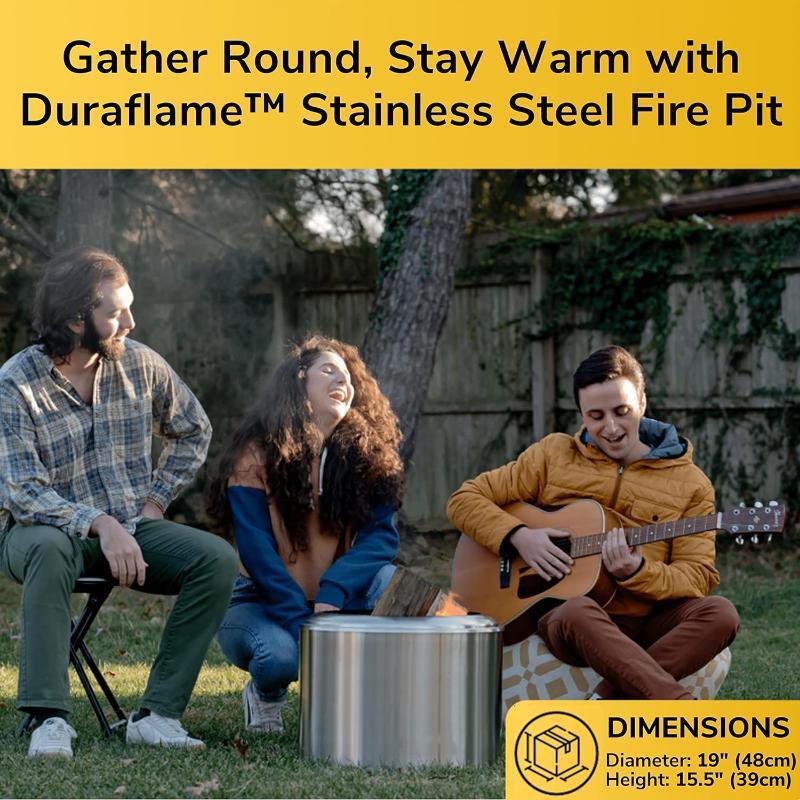
A camping heating fire pit is a portable combustion device designed specifically for outdoor environments. It uses a scientific structure to guide airflow and improve wood burning efficiency. Its core principle is to utilize a double-walled design to create “secondary air intake,” reigniting incompletely burned gases, reducing smoke, and increasing heat output. This design is not only environmentally friendly but also provides stable heat in low-temperature environments, and is widely used in camping, hiking, and other scenarios.
On my last overnight trip to the mountains, the temperature dropped sharply, and a regular tent couldn’t withstand the cold. My friend brought this Naturehike folding stainless steel fire pit. It unfolded in just a few seconds, stood steadily on the ground, and the moment the firewood was lit, warmth instantly spread! It’s made of thickened stainless steel, resistant to high temperatures and deformation, and folds flat like a book, taking up almost no space in luggage. The most surprising thing is the bottom ventilation hole design; the flames burn very efficiently with almost no smoke, and the wind doesn’t easily extinguish them. We cooked coffee and roasted marshmallows around it, and even the food had a smoky, campfire flavor. In the cold night, the firelight flickered, and we all became quiet. It’s not just a heating tool, but more like bringing the “warmth of home” into the wilderness.
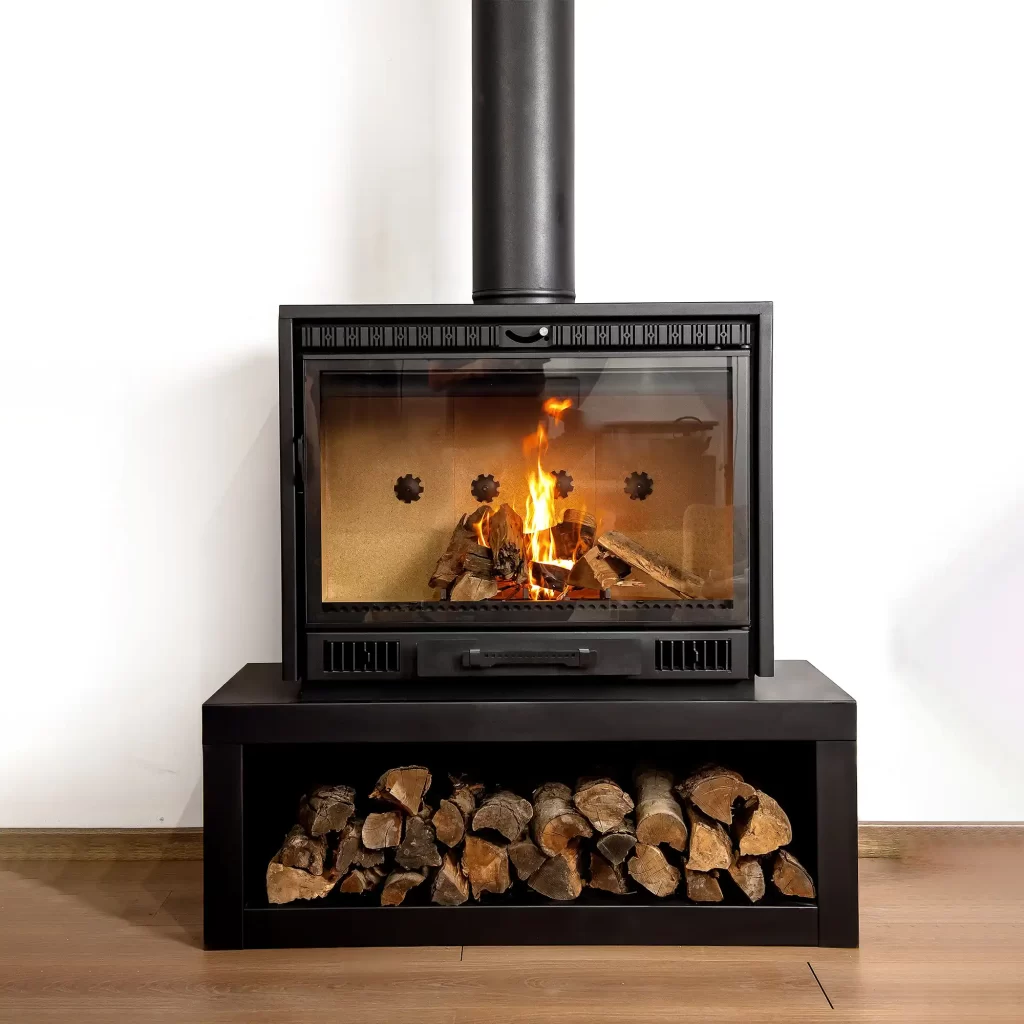
The design principles of real fireplaces are used as technical guidance for many homemade fireplaces.
The essence of a wood-burning fireplace is to create a controllable combustion environment in which firewood can generate heat more efficiently.
How Wood-Burning Stoves Work
The main problem with open fireplaces is that the amount of air entering the combustion process cannot be controlled, resulting in most of the heat being carried away by the chimney. Therefore, open fireplaces are very inefficient for heating, and you have to sit close to them to feel any warmth.
Modern wood-burning stoves, however, help the wood burn and release as much heat as possible through two key methods:
1. Burning the wood in a more controlled manner.
2. Burning off excess combustible gases and particulate matter (soot) in the firebox to generate more heat.
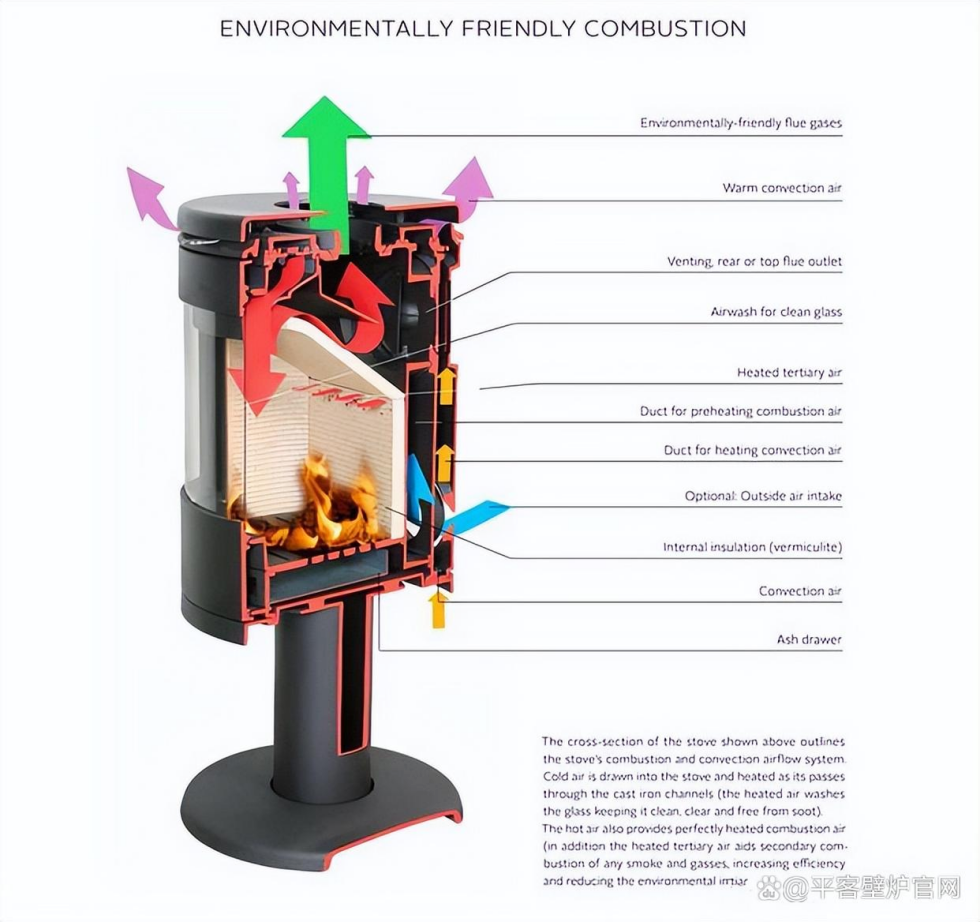
Depending on the model and design of the fireplace, wood-burning stoves usually have one or two air inlets. Experiments have shown that wood burns best with top-down airflow. The diagram below shows how modern wood-burning stoves supply oxygen for combustion.
To make modern fireplaces more efficient than open fireplaces, the first consideration in their design is how to control the air supply to the firebox so that the fire burns at a steady rate within the wood.
It’s important to note that fires that smolder due to insufficient air supply, or fires that burn wood rapidly due to excessive air supply, are both very inefficient.
Secondary Combustion
In addition to burning wood in a more efficient way, modern wood-burning fireplaces usually feature secondary combustion. Secondary combustion refers to the re-burning of exhaust gases and “soot” produced from the initial combustion of wood in a furnace environment exceeding 600°C to generate more heat.
Secondary combustion of exhaust gases and soot requires higher temperatures and pressures, which is achieved in wood-burning fireplaces by providing a closed combustion environment.
To enable more efficient secondary combustion, modern fireplaces are designed with baffles installed at the top of the combustion chamber, forcing the exhaust gases to pass through small gaps at the top of the stove before leaving the chamber. This prevents the exhaust gases from leaving the combustion chamber too quickly, allowing more time for mixing with the incoming air at the top and facilitating secondary combustion.
The design of each model of wood-burning fireplace varies, so the degree to which the stove converts wood into heat will differ slightly. Nordic fireplaces, such as those from Danish brands like Morso and Aduro, typically achieve combustion efficiencies of 75% or higher with the help of secondary combustion, while open fireplaces may have efficiencies as low as 30%. This not only means that a significant amount of heat is not released, but it also increases wood consumption.
Heat Transfer
Many people are curious about how fireplaces provide heating. In fact, fireplaces transfer heat into the space through thermal radiation and convection.
The viewing surface of a wood-burning fireplace is the main heat radiating surface, with a surface temperature reaching around 400 degrees Celsius. The fireplace body, made of steel or cast iron, also helps radiate the heat generated by burning wood into the space.
Because fireplaces primarily rely on thermal radiation for heating, and thermal radiation cannot penetrate obstacles to heat adjacent spaces, this is the main reason why fireplaces cannot provide heating for the entire house.
Keeping the Glass Clean
Many people’s first reaction upon seeing a fireplace is that the glass door will surely turn black. Of course, this is what happens with most low-efficiency fireplaces.
Under normal circumstances, by-products such as creosote produced from burning wood will form streaks and stains on the inside of the glass. Over time, this phenomenon accumulates, making it difficult to fully appreciate the dancing flames in the firebox.
To overcome this problem, efficient wood-burning fireplaces incorporate air curtain and air wash technologies into their design. The chimney creates a draft that draws air into the firebox. A portion of this air enters from the top of the firebox door, supplying a constant airflow to the inside of the glass. This serves two purposes: firstly, it separates the flames from the door, reducing soot buildup; and secondly, it continuously washes the door glass, keeping it clean and clear.
We can understand the secondary combustion and air curtain system of the fireplace more clearly through a video:
Summary
The above explains the working principle of modern wood-burning fireplaces. Many homemade fireplaces use this as a reference for their design and construction. Although the principle seems simple, achieving the optimal balance of various variables requires the continuous efforts and optimization of generations of engineers within a company.