Three-Roll vs. Four-Roll Sheet Metal Rolling Machines: Which Is Better Suited for Your Production Line?
A three-roll plate rolling machine, as the name suggests, is equipped with three rolls that work in unison to bend and roll sheet metal. A four-roll plate rolling machine, on the other hand, adds one more roll, resulting in a configuration of four rolls. This simple increase in the number of rolls brings about a significant improvement in the machine’s performance and processing capabilities. The most direct impact of adding an extra roll is an expansion of the processing range. Due to the limitation in the number of rollers, a three-roll plate rolling machine has a relatively narrow processing range and is typically suitable for thinner or smaller-sized plates. In contrast, a four-roll plate rolling machine can handle a wider range of plates, demonstrating greater adaptability in terms of both thickness and size. This gives the four-roll plate rolling machine a distinct advantage in the processing of large metal structural components and heavy-duty plates.
In industries such as sheet metal fabrication, steel structure manufacturing, and pressure vessel production, sheet metal bending and rolling are core processing operations, and three-roll and four-roll sheet metal bending machines are currently the two most commonly used core pieces of equipment on production lines. When purchasing or upgrading equipment and setting up production lines, many companies often struggle to choose between these two types of machines: while they appear to have similar functions—both capable of rolling sheet metal into circles and forming arcs—they differ significantly in terms of machining precision, production efficiency, process workflows, and investment costs. Choosing the wrong equipment not only leads to production capacity failing to meet demand, finished product precision falling short of standards, and a skyrocketing scrap rate, but also results in equipment idling and wasted capital. This article will comprehensively compare three-roll and four-roll sheet metal bending machines from multiple perspectives—including equipment structure, processing characteristics, advantages and disadvantages, and applicable scenarios—to help enterprises accurately match their production line needs and make cost-effective selection decisions.
Differences in Core Structure and Processing Principles of Equipment
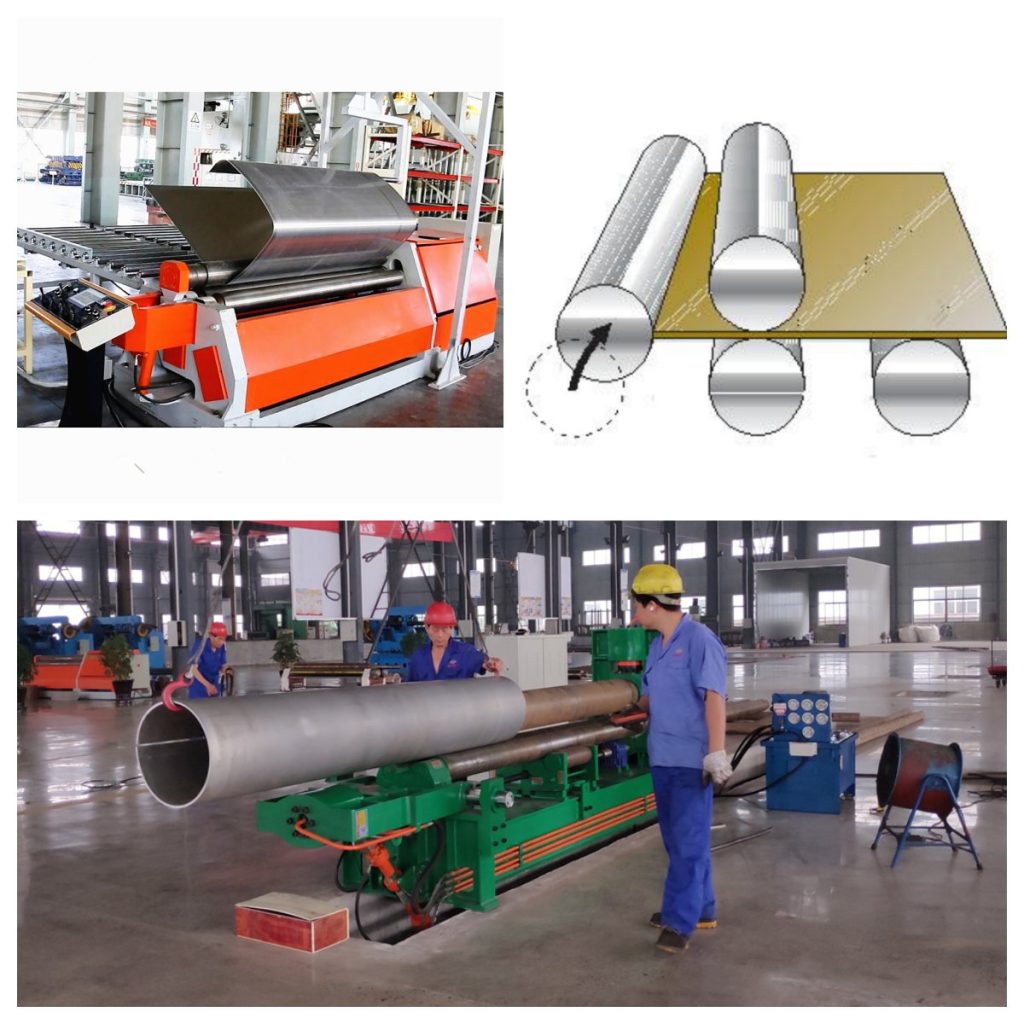
The most fundamental difference between 3-roll and 4-roll Plate bending machines lies in the arrangement of the rollers, which directly determines their processing methods and the quality of the finished products.
1. 3-roll sheet metal Plate bending machine
Three-roll Plate bending machines feature a classic triangular layout, consisting of one upper pressure roll and two lower drive rolls. They are categorized into two mainstream types: the symmetrical model and the universal upper-roll model. The operating principle of the equipment is straightforward: the upper roll presses down vertically on the sheet metal, while the rotating lower rolls drive the sheet forward at a constant speed. The pressure from the roll shafts causes the sheet to undergo plastic deformation, thereby completing the rolling and bending processes. Due to structural limitations, three-roll bending machines have inherent processing shortcomings: a 120–200 mm straight-edge dead zone remains at both ends of the sheet, making it impossible to complete the entire bending or pre-bending process in a single operation. Conventional symmetrical three-roll models cannot pre-bend the ends on the machine itself, while universal three-roll models can only perform single-side pre-bending. When processing complete cylindrical or annular workpieces, it is necessary to flip the workpiece and re-clamp it, or use a separate bending machine to complete the end pre-bending and corrective bending processes. The overall machining process is highly dependent on manual operation.
2. 4-Roll Sheet Metal plate Bending Machine
The four-roll bending machine features a quadrilateral roller layout, consisting of one upper roller, one lower clamping roller, and two independent side pre-bending rollers; it is typically equipped with a CNC-controlled hydraulic drive system. During operation, the upper and lower rollers first securely clamp the sheet metal in place to prevent any shifting or wobbling. The rollers on both sides can be raised, lowered, and pushed independently via hydraulic control, enabling the pre-bending of both ends of the sheet and the circular forming of the center section in a single pass. This design completely resolves the straight-edge processing challenges associated with three-roll machines; the straight-edge allowance for workpieces is only 10–30 mm, and high-end CNC models can achieve near-zero straight-edge processing. The entire process can be completed with a single loading operation, eliminating the need for flipping or re-clamping the workpiece, and offering significant advantages in terms of automation and integrated processing.
A Comprehensive Comparison of the Advantages and Disadvantages of Three-Roll and Four-Roll Plate Rolling Machines
To more clearly distinguish between the suitability of the two devices, we have conducted a comprehensive comparison based on key factors such as machining precision, production efficiency, cost, maintenance complexity, and suitable applications. #hogirollingmachine
Machining Accuracy and Final Product Quality
HOGI 3-roll Plate bending machines offer moderate machining accuracy, and the forming results are heavily influenced by the operator’s skill level. Re-clamping and flipping the workpiece during processing can easily lead to positioning errors. The resulting cylindrical and curved parts are prone to excessive ovality and uneven roundness. Additionally, the straight edges at the ends are relatively long, requiring subsequent cutting, trimming, welding, and grinding, which results in poor consistency in the finished products. HOGI 4-roll CNC Rolling machines offer stable and controllable precision. The CNC system can precisely regulate roller stroke, pressure, and speed, and machining parameters can be saved and reused, ensuring highly consistent forming results for batch-produced workpieces. The straight-edge allowance on workpieces is minimal, weld seams align smoothly, and ovality and roundness errors are far lower than those of three-roll equipment, fully meeting the high-standard machining requirements for precision components and pressure vessels.
Production Efficiency and Labor Costs
The 3-roll Plate bending machine involves a cumbersome process; each workpiece requires multiple clamping, flipping, and alignment steps during a single operation. Processing a single piece takes a long time and relies on skilled operators; novices find it difficult to control forming quality. While it is suitable for small-batch, multi-variety production, it faces significant capacity bottlenecks in high-volume production. Four-roll bending machines enable one-touch forming, completing the entire process with a single loading operation without the need for manual intervention. Production efficiency is 40%–70% higher than that of conventional three-roll machines. Additionally, the CNC system can store process parameters, making product changeovers convenient, significantly reducing reliance on experienced technicians, and effectively saving on long-term labor costs.
Equipment Investment and Maintenance Costs
HOGI 3-roll Plate Rolling machines feature a simple structure, few mechanical components, and a low purchase price, making them entry-level equipment for bending and rolling sheet metal. These machines have an extremely low failure rate and are easy to maintain—requiring only routine lubrication and roller cleaning—so long-term maintenance costs are virtually negligible, and the financial burden is minimal. Four-roll bending machines are equipped with multiple hydraulic drive systems, CNC control systems, and independent side-roll drive mechanisms. Their structure is more complex, and the purchase cost for models of the same specifications is 40%–80% higher than that of three-roll machines. Additionally, they contain a greater number of precision electrical and hydraulic components, which impose stricter requirements on the operating environment and maintenance procedures; as a result, their long-term maintenance costs and repair complexity are slightly higher than those of three-roll machines.
Process Losses and Material Utilization
When processing workpieces with long, straight edges on three-roll equipment, the need to cut off these edges results in material waste. This is particularly true when processing high-cost materials such as stainless steel and high-strength alloys, where the cost of material waste is even higher, and subsequent grinding and trimming processes add additional labor costs. Four-roll equipment results in minimal straight-edge waste, significantly reducing sheet cutting scrap and markedly improving material utilization. At the same time, it eliminates the need for extensive subsequent trimming and re-bending operations, offering a higher overall cost-effectiveness in processing. #hogimachine #platerollingmachine
Use Cases:
HOGI Four-roll plate rolling machines excel in the rolling of large-diameter cylindrical structures. For example, the fabrication of workpieces such as wind turbine towers, large storage tanks, and pipelines typically requires pre-bending the sheet metal at both ends while ensuring the accuracy of the butt welds. The four-roll configuration enables both pre-bending and rolling to be completed in a single operation, reducing the number of times the sheet metal needs to be flipped and thereby improving production efficiency. Furthermore, when rolling conical sections, the four-roll machine can accommodate the forming requirements of sheet metal with varying taper angles by adjusting the inclination of the side rolls—a capability that three-roll machines struggle to achieve.
Precise Equipment Selection: Which Type of Equipment Should You Choose for Your Production Line?
Scenarios Where Three-Roll Sheet Metal Rolling Machines Are the Preferred Choice
1. Production involves single-piece, small-batch, and multi-product runs, with scattered orders and no need for continuous, large-volume production;
2. The company has a limited equipment budget and seeks low investment and high practicality to control equipment procurement costs;
3. The products being processed are standard steel structural components, ventilation ducts, simple curved components, and standard cylindrical bodies, with no high-precision roundness requirements;
4. The workshop is already equipped with a dedicated bending machine capable of independently performing end pre-bending and corrective bending operations on sheet metal;
5. Frequent processing of thick-plate rounding and conical cylinder fabrication is required, demanding high rigidity and heavy-duty performance from the equipment.
Scenarios Where Four-Roll Sheet Metal Rolling Machines Are the Preferred Choice
1. Focusing on high-volume, standardized mass production, with a goal of achieving high production efficiency and a stable yield rate;
2. Processing high-end precision components, such as pressure vessels, boilers, chemical storage tanks, wind turbine nacelles, and stainless steel tanks, which have strict standards for roundness and weld seam precision;
3. Processing high-value sheet metal (stainless steel, high-strength alloy sheets), with the goal of reducing material waste and lowering production costs;
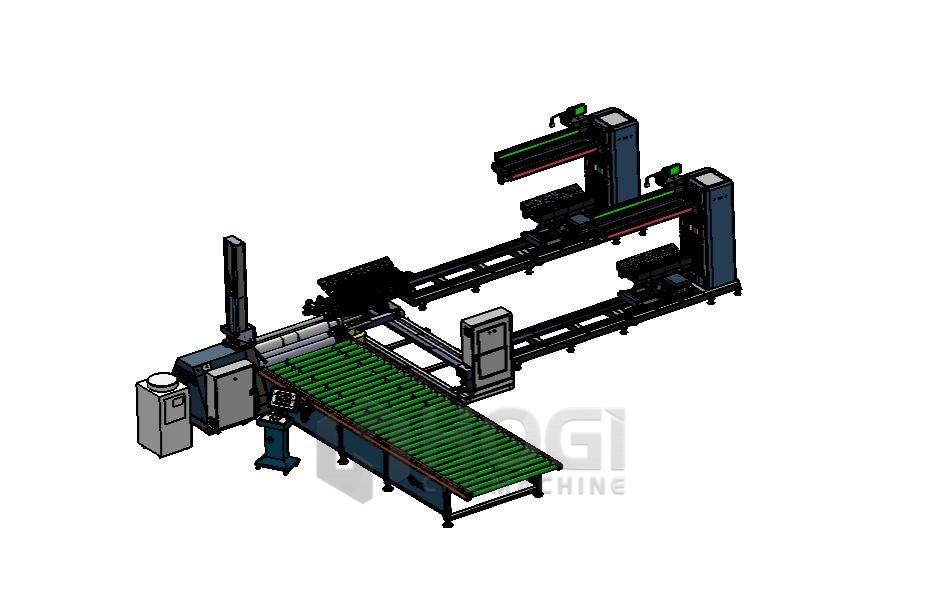
4. Planning to establish an automated production line, requiring equipment compatible with loading/unloading and welding-integrated assembly lines to achieve unmanned, intelligent production;
5. Companies with limited skilled labor resources seeking to reduce reliance on manual labor and achieve parametric, standardized processing.
Summary: Choose the right model based on your needs to maximize production line efficiency
Overall, three-roll plate bending machines are cost-effective, entry-level machines that excel in affordability, durability, and ease of maintenance. They are well-suited for routine machining scenarios involving small to medium production runs and standard precision, making them the top choice for small and medium-sized machining enterprises. Four-roll bending machines, on the other hand, are high-efficiency, precision-oriented upgraded models. Their core advantages lie in high throughput, high precision, and low material waste, making them ideal for mid-to-high-end production scenarios involving large production runs, high precision, and automation.When selecting equipment, there is no need to blindly pursue high-end models, nor should one be overly fixated on low prices. By matching the equipment to your specific production volume, product precision requirements, sheet metal material, budget, and production line upgrade plans, you can maximize the value of the equipment, reduce overall production costs, and enhance the overall competitiveness of your production line. #4rollerrollingmachine