


Calculating Press Brake Tonnage: A Step-by-Step Guide for Metal Fabricators
Basic Principles of Press Brakes
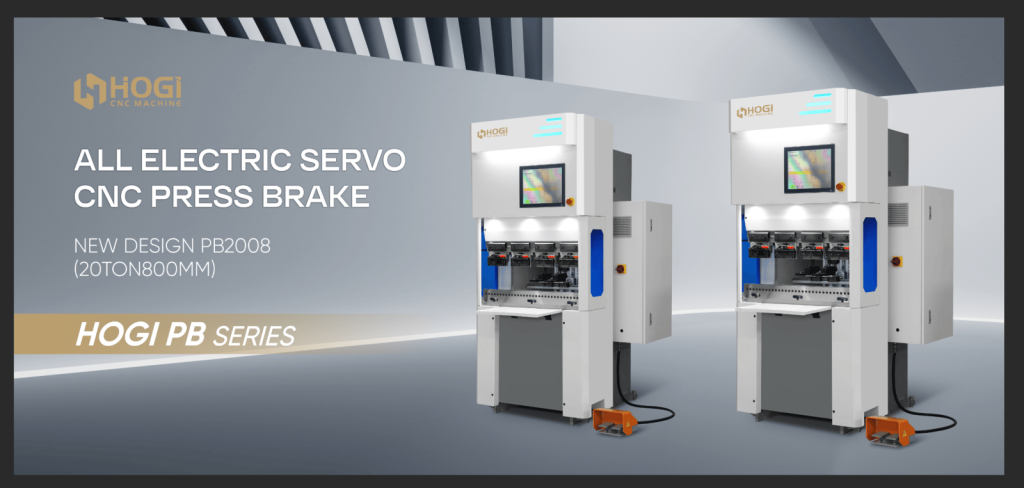
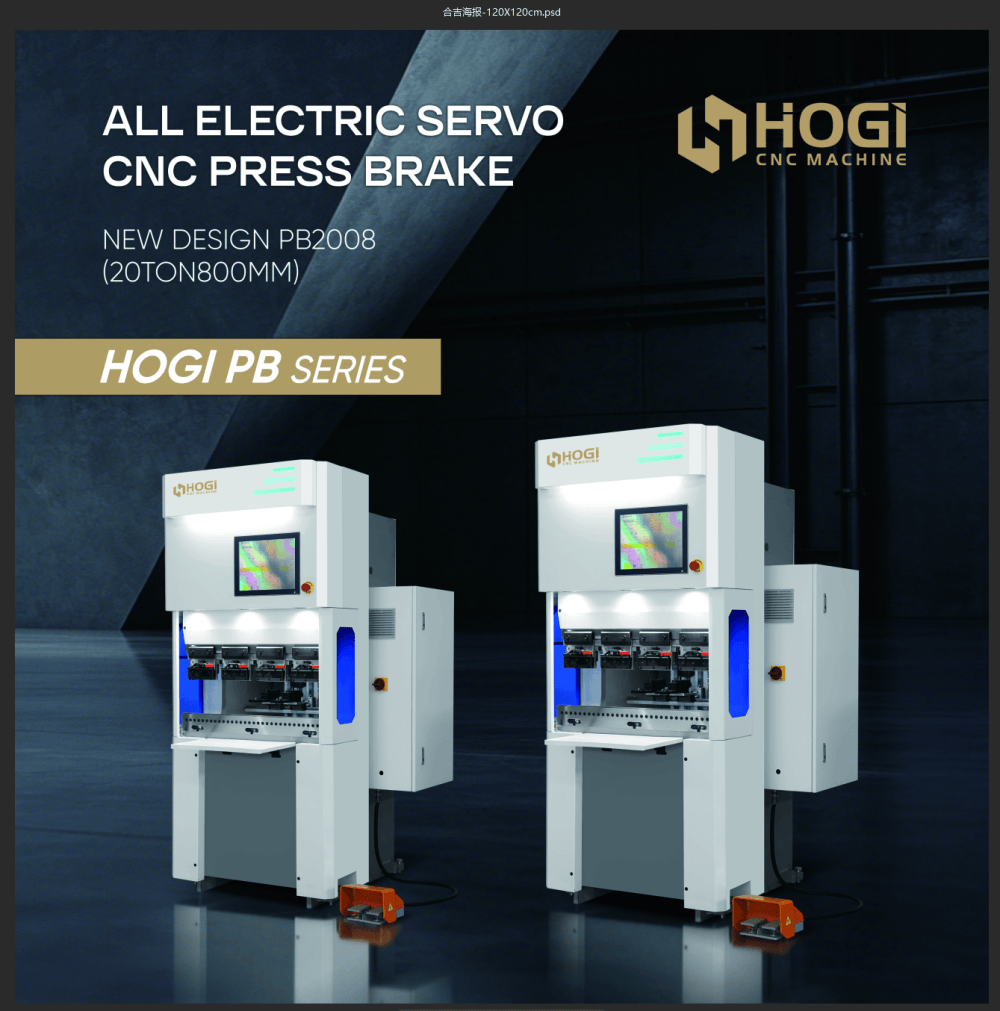
HOGI press brake is a type of machinery widely used in sheet metal fabrication. Its primary function is to bend sheet metal using an upper die and a lower die to achieve the desired shape. The pressure applied during this bending process is referred to as the working tonnage. It is influenced by multiple factors, including the bending radius, bending method, die ratio, bend length, as well as the thickness and strength of the material being bent. The tonnage of a press brake refers to the unit of measurement for the machine’s pressure and is one of its key performance indicators. During processing, we must calculate the required bending force based on the sheet material’s composition, thickness, and the desired bending angle, and then select the appropriate press brake and dies.
What Is the Tonnage of a Press Brake?
The tonnage of a press brake actually refers to the maximum bending force it can provide under maximum operating pressure. This is an important parameter to consider when selecting a press brake. The following is a commonly used formula for calculating tonnage: P = (k * t² * s) / (4 * W). In this formula, P represents the required press brake tonnage (in metric tons), k is a coefficient (typically 650 N/mm²), t is the sheet thickness (in mm), s is the bending length of the sheet (in mm), and W is the opening width of the lower die (in mm). This formula can be used to roughly estimate the required tonnage of the press brake, serving as a reference when selecting equipment.
Method for Calculating the Tonnage of a Press Brake
The tonnage of a press brake is typically calculated based on factors such as material strength, length, bending angle, and thickness. The following are the corresponding formulas:
1. Normal bending force of the material (T) = Material strength (PSI) × Material thickness (inches) × Bending length (inches) ÷ 12
2. Press brake tonnage (Ton) = Normal bending force of the material (T) ÷ 2000
3. Basic Formula: Required press tonnage (T) = (1.42 × material tensile strength × plate thickness² × bend length) / (8 × lower die opening width)
4. Tensile strength: Approximately 450 MPa for ordinary low-carbon steel and approximately 650 MPa for stainless steel (Source: *Handbook of Metallic Materials*, China Machinery Industry Press).
5. Example: To bend a 3 mm thick, 1-meter-long Q235 steel plate (tensile strength 450 MPa) using a lower die opening of 32 mm, the tonnage required is (1.42 × 450 × 3² × 1000) / (8 × 32) ≈ 75 metric tons.
6. Impact of Key Parameters
Sheet thickness: Tonnage is directly proportional to the square of the sheet thickness; a 2-mm-thick sheet requires 20 metric tons, while a 4-mm-thick sheet requires 80 metric tons (under identical conditions).
Lower die opening: The larger the opening, the lower the tonnage required. For example, a 32-mm opening reduces the required pressure by approximately 50% compared to a 16-mm opening.
Here, PSI represents the material’s strength value, which can be found in the material’s physical properties table.
Quick Calculation Methods for Sheet Metal Bending and Unfolding
In sheet metal fabrication, bending and unfolding are two critical steps. Since one side of the material is stretched while the other is compressed during the bending process, accurate calculations require a comprehensive consideration of various factors, including material type, thickness, heat treatment, and the bending angle during processing. A detailed explanation of the principles behind unfolding calculations:
During the sheet metal bending process, the outer layer of the sheet is subjected to tensile stress, while the inner layer is subjected to compressive stress. Between these two layers lies a transition layer that is subjected to neither tensile nor compressive stress; this is known as the neutral layer. It is important to note that the length of the neutral layer remains constant during bending, making it a key reference for calculating the developed length of the bent part. The position of the neutral layer shifts as the degree of deformation changes. When the bending radius is large and the bending angle is small, the degree of deformation is relatively small, and the neutral layer is located near the center of the sheet’s thickness. However, as the bending radius decreases and the bending angle increases, the degree of deformation also increases accordingly, causing the neutral layer to gradually shift inward toward the center of the bend.
Considerations Regarding the Tonnage of Press Brakes
1. When processing with a press brake, the width of the material should be less than or equal to the length of the press brake’s working area.
2. For metal materials prone to bending, increase the material thickness and use supports at both ends of the material to distribute the force.
3. For extra-long metal materials, install a rigid support in the center of the metal sheet to distribute the force and increase the material thickness.
4. For sharp-angle bends, the size of the sharp angle must be reduced, and the size of the die should be selected appropriately based on the material thickness and bending angle.
5. During the bending process, avoid the material bending outward or being squeezed inward.
6. Material correction factors: For stainless steel, multiply the tonnage by 1.5; for aluminum, multiply by 0.6 (refer to the U.S. ASME standard).
7. Bending radius requirements: Smaller radii require higher tonnage; for example, R0.5t requires 20% more pressure than R1t.
8. Equipment redundancy design: It is recommended to select a machine with 1.2–1.5 times the calculated tonnage; for example, if the calculation yields 80 metric tons, choose a 100-metric-ton model (to prevent die damage caused by long-term full-load operation).
9. Multi-pass bending: Performing a 90° bend in two 45° passes can reduce the pressure per pass by 30%.
Other Key Factors Affecting Tonnage
1. Material Properties: Stainless steel (tensile strength of 520 MPa or higher) requires approximately 30% more tonnage than low-carbon steel;
2. Bending Angle: A 90° bend is the standard value; if the angle is smaller (e.g., an acute angle), the tonnage requirement increases by 20%–50%;
3. Die Matching: A V-groove that is too narrow can cause a sharp increase in tonnage requirements; selection must strictly follow the sheet thickness:
Sheet thickness: 1–2 mm, recommended V-groove width: 6–16 mm
Sheet thickness: 3–5 mm, recommended V-groove width: 24–40 mm
Sheet thickness: 6–10 mm, recommended V-groove width: 50–80 mm
How to Select the Tonnage Based on Production Needs
1. Allow for a safety margin: Add 15%–20% to the calculated value to prevent equipment overload;
2. Balance efficiency and cost: Higher-tonnage models can process thicker materials but have higher energy consumption and procurement costs;
3. Verify equipment parameters: During actual testing, conduct a comprehensive evaluation that takes into account factors such as machine rigidity and hydraulic system stability.
The methods for calculating press brake tonnage and related precautions are crucial in metalworking. Correctly calculating press brake tonnage can prevent excessive wear and material damage, improve production efficiency, and ensure product quality and safety. In practice, it is necessary to select the appropriate press brake tonnage based on specific bending requirements to ensure proper processing. #hogipressbrake