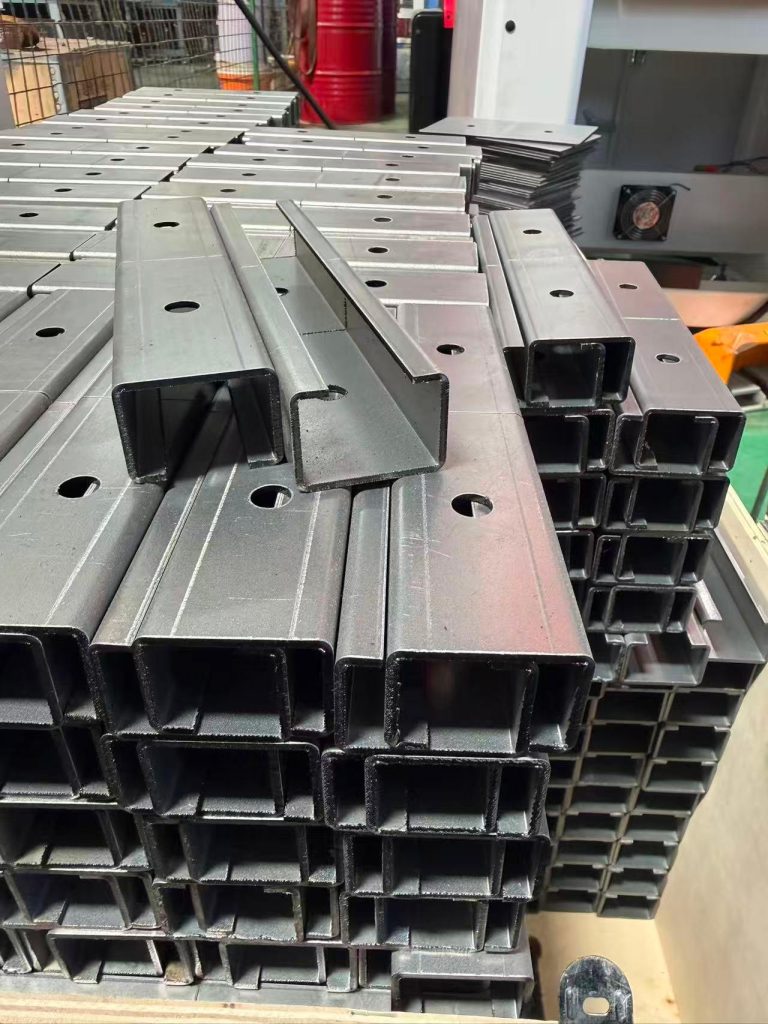
Hogi Small bending machines are a compact type of bending machine, mainly used for bending and shaping metal sheets, pipes or wires. They are characterized by their relatively small size and compact structure, making them suitable for small-batch production, repair workshops, laboratories or processing environments with limited space. Common types include manual, hydraulic, servo electric and CNC.
Definition, Main Types, and Applicable Scenarios of Small Bending Machines
Basic Definition: The core function of a small bending machine is the same as that of a standard bending machine; both utilize mechanical force (manual or hydraulic) or electromagnetic force to bend thin metal sheets, pipes, or wires. However, their design emphasizes portability, small footprint, and suitability for lighter load processing tasks.
Main Types: Based on the drive and control method, small bending machines are mainly divided into the following categories:
Manual Bending Machines: These are typically powered by levers, handwheels, or foot pedals. They have a simple structure, are inexpensive, and are suitable for simple bending operations on extremely thin sheets (such as sheet metal and aluminum plates) or wires such as iron wire and steel bars.
HOGI Hydraulic bending machines: Driven by hydraulic system, they have a wide tonnage (pressure) range (e.g., 30 to 100 tons) and can handle thicker or longer sheets. They are a common type in small workshops.
HOGI Servo electric/CNC bending machines: Driven by servo motor and equipped with CNC system, they offer high precision (repeatability up to ±0.0004 inches) and high degree of automation, suitable for small-batch sheet metal processing requiring high precision and repeatability.
Dedicated small bending machines: Designed for specific materials, such as busbar (copper and aluminum busbar) processing machines, wire bending and forming machines, or greenhouse steel pipe bending machines, with specialized functions.
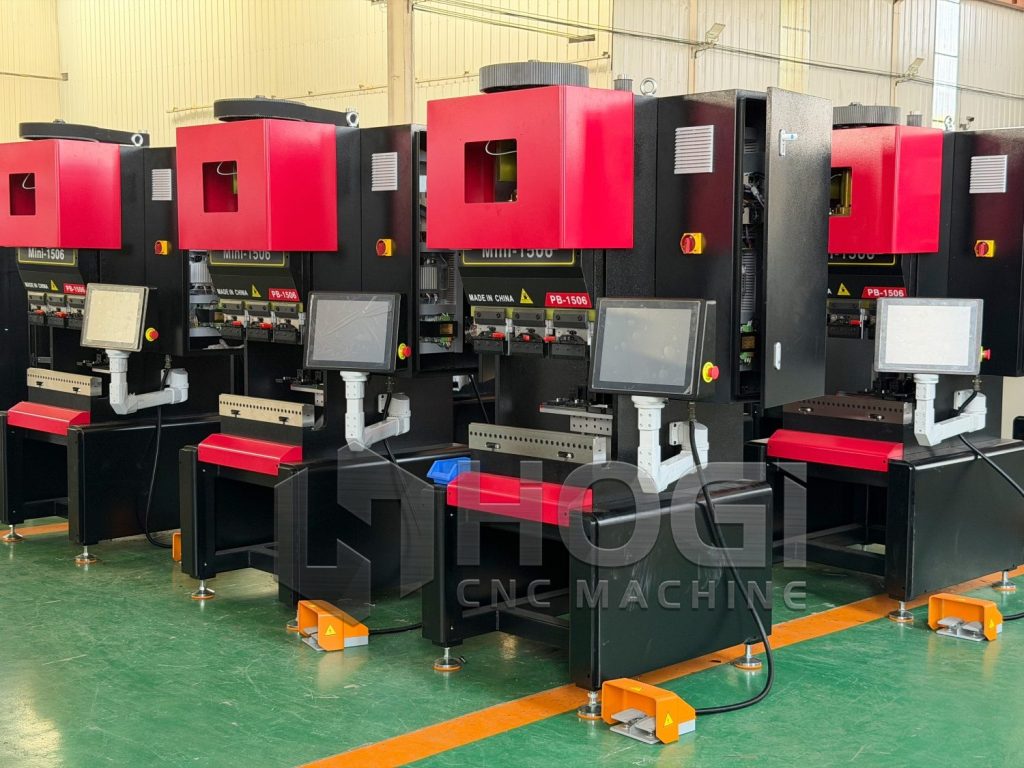
Applicable Scenarios and Industries: Due to their flexibility, small bending machines are widely used in electrical cabinet manufacturing, lighting hardware processing, automobile repair, home appliance production, laboratory prototyping, elevator component processing, and light engineering machinery, especially suitable for light industry and service sectors with diversified products and small batch sizes.#smallbendingmachine
Key Points for Purchasing a Small Bending Machine
When selecting small bending machine, it is necessary to comprehensively consider processing requirements, precision, budget, and long-term operating costs. The key points are as follows:
**Define Processing Requirements:** This is the primary consideration.
**Processing Materials:** Different materials require different pressures. For example, stainless steel requires approximately 1.5 times the pressure of low-carbon steel, while soft aluminum may require 50% less.
**Maximum Processing Thickness and Length:** Determine the thickest sheet metal and longest workpiece size you need to bend. This directly determines the minimum table length and tonnage required for the machine. Tonnage estimation can be found in the tonnage tables provided by the manufacturer.
**Workpiece Shape and Bending Radius:** If a very small bending radius (close to or less than the material thickness) is required, consider bottom die forming or stamping bending. These processes require 4 to 10 times the pressure of free bending, placing higher demands on the machine’s tonnage.
**Assess Precision Requirements:** If bending precision is required to be within ±1° and must be stable, a CNC bending machine should be prioritized due to its high slide repeatability (±0.0004 inches). For applications requiring an accuracy of ±2~3°, a manual or standard hydraulic bending machine may be more economical.
Considerations for press brake Die Matching and Deflection:
Press brake Die/Tools: New machines may require new dies; die precision must be checked. Precision-ground dies (±0.0004 inches per foot) are better suited for CNC machine tools, while standard dies are suitable for manual machine tools.
Bedning Machine Deflection: Shorter machines (shorter worktables) exhibit less deflection (deformation) under the same load, making it easier to produce qualified parts and reducing setup time.
Choosing the Appropriate Type: Select the appropriate type of machine based on your specific processing material (sheet metal, tubing, or wire). For example, a dedicated busbar processing machine can be selected for processing busbars (copper/aluminum bars), while a wire bending machine can be selected for processing wire or rebar.
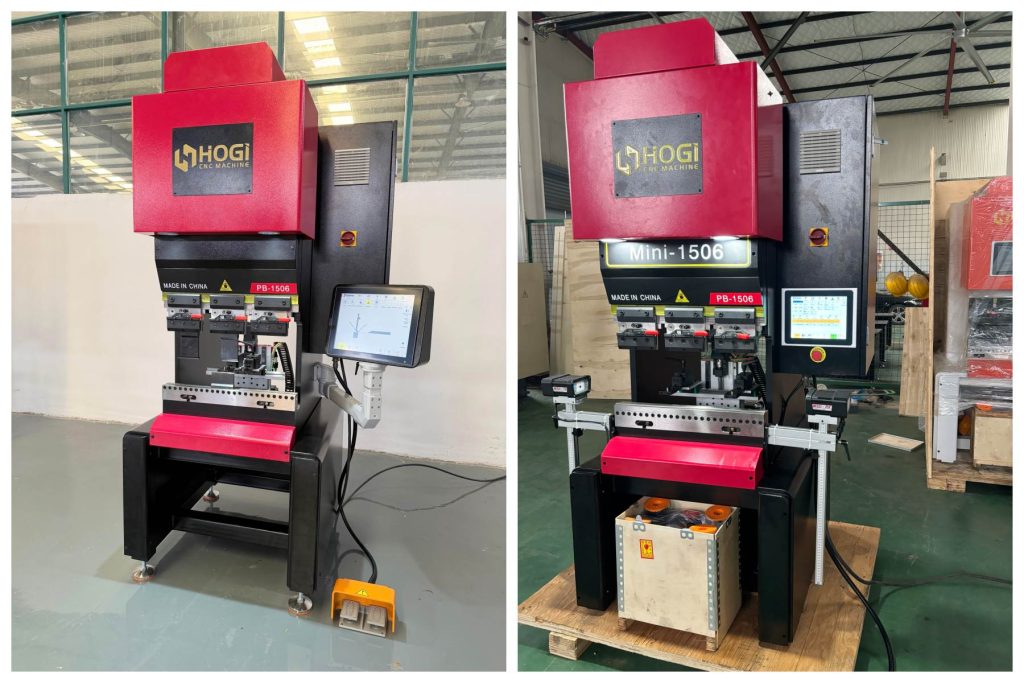
HOGI Servo Electric Bending Principle and Miniaturization Technology Evolution
Servo electric bending is high-precision forming process in modern sheet metal processing. It uses a servo motor to directly drive the slider, replacing the traditional hydraulic system and achieving closed-loop control of position, speed, and pressure. Compared to hydraulic presses, it offers faster response, lower energy consumption, repeatability of ±0.02mm, and is leak-free, noiseless, and maintenance-free for extended periods.
HOGI Small Bending Machine Mini press brake: Essential Equipment for Metal Processing
HOGI small bending machine is mechanical device used for cold forming of metal sheets. It primarily uses the relative movement of the upper and lower dies to apply pressure to the metal sheet, causing plastic deformation and obtaining parts with the desired angle or shape. Its core function is to achieve high-precision, high-efficiency bending processing, and it is widely used in home appliances, communication cabinets, architectural decoration, and small mechanical parts. Compared to large bending equipment, small bending machines have significant advantages in terms of compact structure, operational flexibility, and site adaptability.
From a technical perspective, small bending machines typically employ hydraulic or mechanical drives, with some high-end models equipped with CNC systems for multi-axis linkage and programmed control. Key components include the slider, worktable, die clamping device, and control system, with the slider’s motion accuracy directly affecting the bending angle’s precision. Modern small bending machines generally feature angle compensation functions, effectively offsetting springback errors and improving processing consistency. Furthermore, some models integrate quick die change systems, significantly reducing auxiliary time and increasing production efficiency.
In practical applications, small bending machines are particularly suitable for small- to medium-batch production or space-constrained workshop environments due to their small footprint, low energy consumption, and ease of operation. For example, in the manufacturing of customized chassis, electrical cabinet doors, and metal furniture, this equipment can quickly complete multi-angle bending tasks to meet diverse order requirements. Furthermore, when working in conjunction with shearing machines, laser cutting machines, and other equipment, it can create efficient small sheet metal processing units, enhancing overall manufacturing flexibility.
As the manufacturing industry moves towards intelligence and precision, the technological evolution of small bending machines is also showing new trends. On the one hand, the level of CNC and automation is constantly improving, supporting remote monitoring, fault diagnosis, and process parameter optimization; on the other hand, the application of lightweight design and energy-saving technologies further reduces equipment operating costs. In addition, the introduction of modular design concepts makes the equipment easier to maintain and upgrade, extending its service life.
Looking to the future, with the expanding application of new materials (such as high-strength aluminum alloys and composite materials) in the industrial field, and the growth of personalized customization demands, small bending machines will continue to be optimized in terms of precision, speed, and adaptability. Simultaneously, deep integration with the Industrial Internet of Things (IIoT) will drive its deep integration into intelligent manufacturing processes, becoming an indispensable part of flexible manufacturing systems. Its development prospects are broad, and technological iteration will continue to empower the transformation and upgrading of small and medium-sized manufacturing enterprises.