


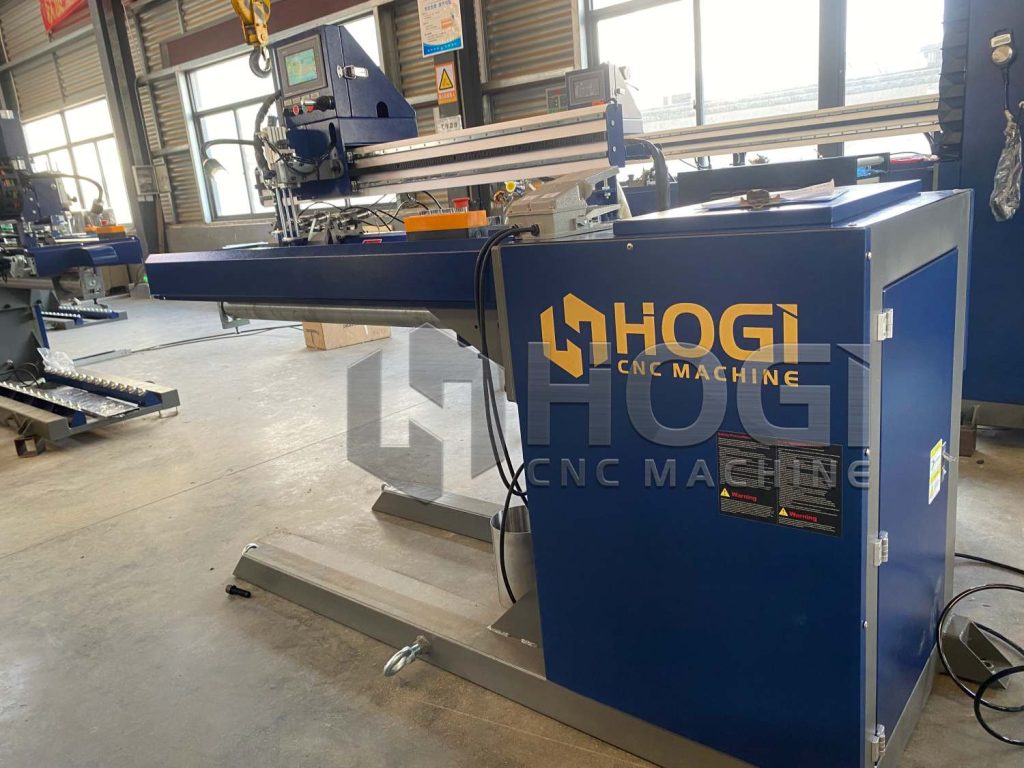
A longitudinal seam welding system is more than a welding torch moving along a straight line. It combines mechanical positioning, precise motion control, stable heat input and intelligent process management to produce consistent, low-deformation welds on cylinders, flat plates and open-ended square boxes. For engineers who need to understand the inner logic of the equipment, knowing how the system works is essential for proper selection, operation and maintenance.
This article explains the core working principle, key components and control logic of a longitudinal seam welder, using typical configurations such as TIG with copper backing, PLC motion control and TBI linear guides as examples. If you want to see detailed machine configurations and specifications, you can refer to the official longitudinal seam welding machine page for reference.
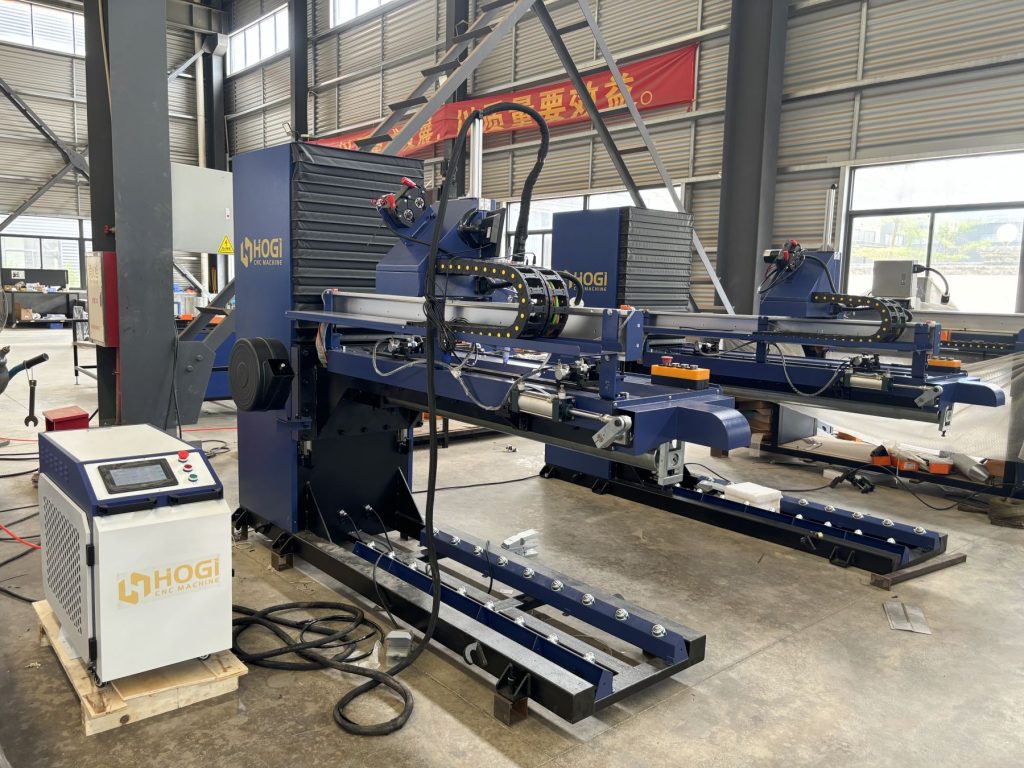
Overall Architecture of a Longitudinal Seam Welding System
The system can be divided into four main parts: mechanical structure, motion control, welding power source and auxiliary devices. Each part has a specific function, but they must work together to ensure stable seam quality.
Mechanical Structure
The mechanical part provides the foundation for clamping, positioning and torch travel.
- Main frame and spindle: one-piece spindle processing with built-in copper bar and split full copper platen ensures stable support for cylindrical workpieces.
- Positioning column: electric height adjustment of the main beam adapts to different pipe diameters and simplifies loading.
- Welding table and support: hold the workpiece in place and maintain alignment during welding.
The rigidity of the frame and the precision of the spindle directly affect weld straightness and repeatability. A well-designed mechanical structure reduces vibration and deformation under thermal load.
Motion Control and Torch Travel
Motion control is where automation and precision come together. In a typical longitudinal seam welder, the torch moves along the seam while the workpiece is clamped and rotated or fixed.
- Linear motion: TBI linear guide and TBI ball screw ensure smooth, low-friction torch travel along the seam.
- Axial control: single-axis PLC control manages torch speed and position with high repeatability (around ±0.2 mm).
- Program storage: up to 999 programmable programs per file allow quick changeover between different diameters and lengths.
The combination of high-precision guides and PLC control makes it possible to run long seams with consistent speed and penetration, which is critical for tanks and ducts with tight quality requirements.
Welding Power Source and Process
The welding power source determines the heat input, penetration and surface finish. Modern longitudinal seam systems are often designed as multi-process platforms.
- TIG (argon arc): suitable for stainless steel and galvanized sheets, with low deformation and clean weld appearance, especially when used with copper backing.
- MAG: higher efficiency for carbon steel, with good penetration and faster welding speed.
- Laser: very high speed and excellent deformation control, ideal for thin-walled pipes and high-volume production.
Typical configurations include Panasonic YC-400TX DC TIG power sources, which offer IGBT-controlled arc stability and flexible parameter settings. The choice of process depends on material thickness, weld quality standard and production volume.
Auxiliary Devices for Weld Quality
Auxiliary devices help stabilize the weld pool and control heat, which is especially important for thin sheets and stainless materials.
- Copper backing plates: absorb heat and support the molten pool to reduce distortion and improve penetration control.
- Airbag compression with copper plates: flexible compression maintains thermal conductivity across the weld surface.
- Bottom spindle with copper groove and backside guarantee device: ensures consistent melting depth and prevents under-welding or over-welding.
These devices work together with the motion system and power source to produce seams that are both structurally sound and visually clean.
Torch Lifting, Positioning and Fine Adjustment
The welding torch is the most critical component in the whole process. Its movement and positioning determine the accuracy of the weld seam.
Pneumatic and Electric Lifting
Most systems use a combination of pneumatic and electric lifting to balance speed and precision.
- Torch lifting: pneumatic ascending and descending for fast, repeatable on/off actions.
- Truss lifting: electric lifting for precise height adjustment of the welding beam.
- Fine adjustment: up/down/left/right fine-tuning of the torch to align with the seam edge.
This design reduces manual handling and makes it easier to achieve consistent torch gap and angle across different workpieces.
Positioning and Clamping
Accurate positioning and clamping are essential to prevent seam offset during welding.
- External positioning and centering device: high-precision alignment to ensure the seam is exactly under the torch.
- Pneumatic inverted head: eliminates manual operation and improves repeatability.
- Pneumatic clutch travel mechanism: quickly push the torch to the required position based on product length without touch-screen programming.
These features help less experienced operators achieve stable results and reduce setup time, which is important for multi-product factories.
Control Logic and Automation Features
The control system is the “brain” of the longitudinal seam welder. It coordinates motion, power source and auxiliary devices to ensure consistent weld quality.
PLC Control and Single-Axis Motion
A typical system uses PLC control with single-axis motion for torch travel along the seam.
- Welding speed: adjustable from 3–5 mm/s, depending on material and thickness.
- Repeat positioning accuracy: around ±0.2 mm, ensuring consistent seam location across batches.
- Program storage: up to 999 sets, allowing quick switching between different diameters and lengths.
PLC control improves stability and reduces the impact of operator errors, which is especially important for long production runs.
Continuous and Segmented Welding
Longitudinal seam systems can perform both continuous and segmented welding, depending on the application.
- Continuous welding: for long seams where full joint penetration is required.
- Segmented welding: for short seams or specific joint configurations, allowing controlled heat input.
The system can switch between these modes via program settings, giving flexibility for different product types.
Comparison of TIG, MAG and Laser Working Mechanisms
Different welding processes have different working mechanisms, which affect heat input, penetration and surface finish.
| Process | Heat Input | Penetration | Surface Finish | Typical Use |
|---|---|---|---|---|
| TIG | Low to medium | Controlled | Clean, smooth | Stainless chimneys, thin ducts |
| MAG | Medium to high | Deep | Slightly rougher | Carbon steel tanks, structural parts |
| Laser | Very focused | High with minimal heat zone | Very clean | Thin-walled pipes, high-volume HVAC |
TIG offers excellent control over heat and appearance, ideal for thin stainless. MAG provides higher efficiency for thicker carbon steel. Laser delivers the best speed and deformation control, but at a higher cost. The working principle of each process influences how the system is designed and how it is operated.
Case Study: HVAC Duct Manufacturer in Thailand
An HVAC duct manufacturer in Thailand upgraded from manual welding to a longitudinal seam welding system with TIG source and copper backing to improve seam consistency and reduce rework.
Background: The factory produced galvanized sheet ducts for air conditioning systems. Manual welding caused uneven seams and frequent leaks, leading to customer complaints.
Solution: They installed a longitudinal seam welder with PLC control, pneumatic torch lifting and program storage for quick changeover between duct sizes. The system used TIG welding with copper-backed platen to control heat and deformation.
Result: Leak rate decreased significantly, and welding time per duct was reduced by about 50%. Operators could handle multiple duct sizes without re-teaching the machine each time.
This case shows how understanding the working principle of the system helps in selecting the right configuration for a specific application.
Client Testimonial: Pipe and Chimney Fabricator in Pakistan
A pipe and stainless chimney fabricator in Pakistan described their experience after switching to a longitudinal seam welding machine with TIG power source.
They reported that seam consistency improved dramatically compared to manual TIG. The pneumatic torch positioning and fine adjustment made it easier to maintain the correct gap and angle, especially on long seams. For a small workshop with limited skilled welders, this type of equipment helped stabilize quality without increasing labor cost.
FAQs: Common Questions About Longitudinal Seam Welding System Working Principle
1. How does the torch move along the seam?
The torch moves along the seam using TBI linear guides and ball screws, driven by a single-axis PLC-controlled motor. This ensures smooth travel and consistent speed, which is critical for uniform penetration and appearance.
2. What is the role of copper backing in TIG welding?
Copper backing absorbs heat and supports the molten pool, reducing distortion and improving penetration control. It is especially important for thin stainless and galvanized sheets where deformation must be minimized.
3. How does PLC control improve weld quality?
PLC control ensures stable torch speed and position, reduces operator errors and allows quick program changes between different diameters and lengths. This leads to more consistent welds across batches.
4. Can one system support both continuous and segmented welding?
Yes. The system can switch between continuous and segmented welding via program settings, allowing flexible heat input for different joint configurations.
5. How does working principle affect maintenance and troubleshooting?
Understanding the motion control, power source and auxiliary devices helps in identifying the root cause of issues. For example, if the seam is offset, it may be a positioning or clamping problem; if penetration is inconsistent, it may be related to torch gap or power source parameters. If you want to learn more about common issues and maintenance practices, you can read the article on longitudinal seam welding machine troubleshooting and maintenance.
Recommended Company: HOGI Longitudinal Seam Welding System Solutions
HOGI designs longitudinal seam welding systems based on a rigid one-piece spindle assembly, TBI linear guides and ball screws, and PLC-controlled single-axis motion. Their machines support TIG, MAG or laser sources, with options for copper backing, airbag compression and pneumatic torch lifting to match different materials and production requirements.
For companies that need stable, repeatable welds on tanks, ducts, chimneys and cylindrical fabrication, HOGI’s longitudinal seam welding platform offers a balanced combination of mechanical precision, control stability and process flexibility. The company also provides on-site installation, operator training and after-sales support, which is important for long-term stability of the equipment.
Authoritative Sources
“Welding Handbook, Volume 2: Welding Processes”
https://www.aws.org/welding-handbook-processes
“Fundamentals of Metal Casting and Welding”
https://www.sciencedirect.com/welding-fundamentals
“Welding: Principles and Applications”
https://www.elsevier.com/welding-principles
“Metallurgy of Welding”
https://www.taylorfrancis.com/metallurgy-of-welding
“Advanced Welding Processes and Technologies”