


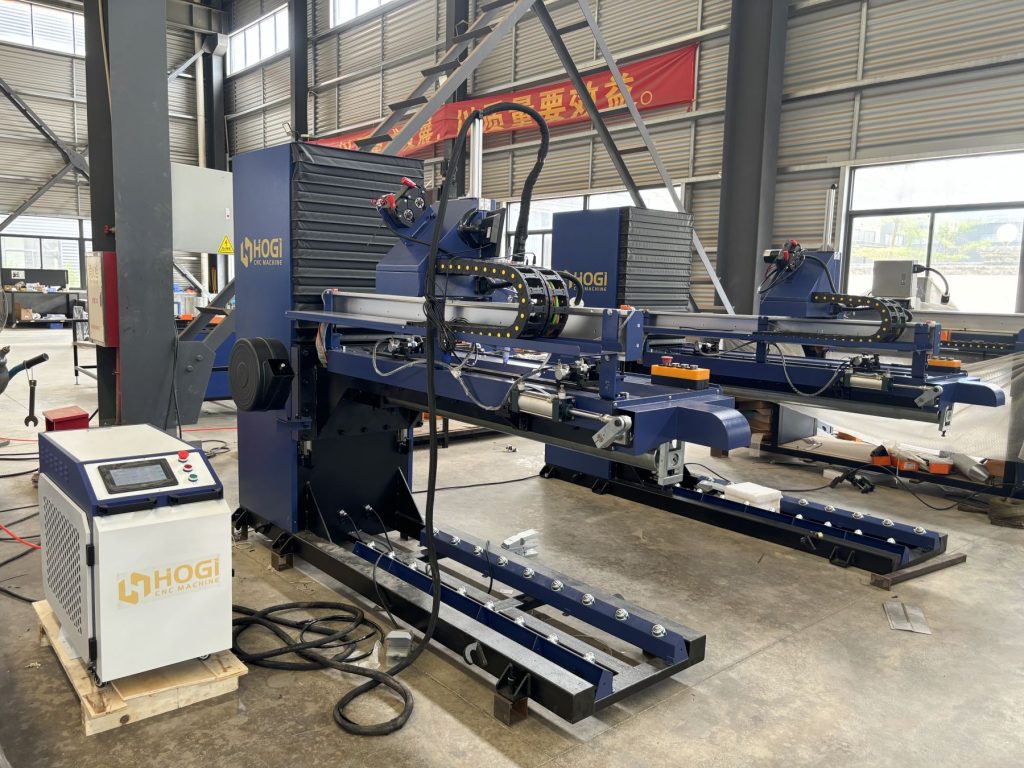
Once a longitudinal seam welding machine is installed and running, its long-term performance depends more on how it is maintained and how quickly problems are identified and solved. Weld defects, torch offset, penetration inconsistency and control errors are common issues that can appear over time, especially in high-volume production environments. For factory engineers and maintenance teams, having a clear troubleshooting and maintenance approach is essential to keep weld quality stable and avoid costly downtime.
This article explains common problems with longitudinal seam welders, their typical causes and practical solutions, based on typical configurations such as TIG with copper backing, PLC motion control and TBI linear guides. If you want to see detailed equipment specifications and configuration options, you can refer to the official longitudinal seam welding machine page for reference.
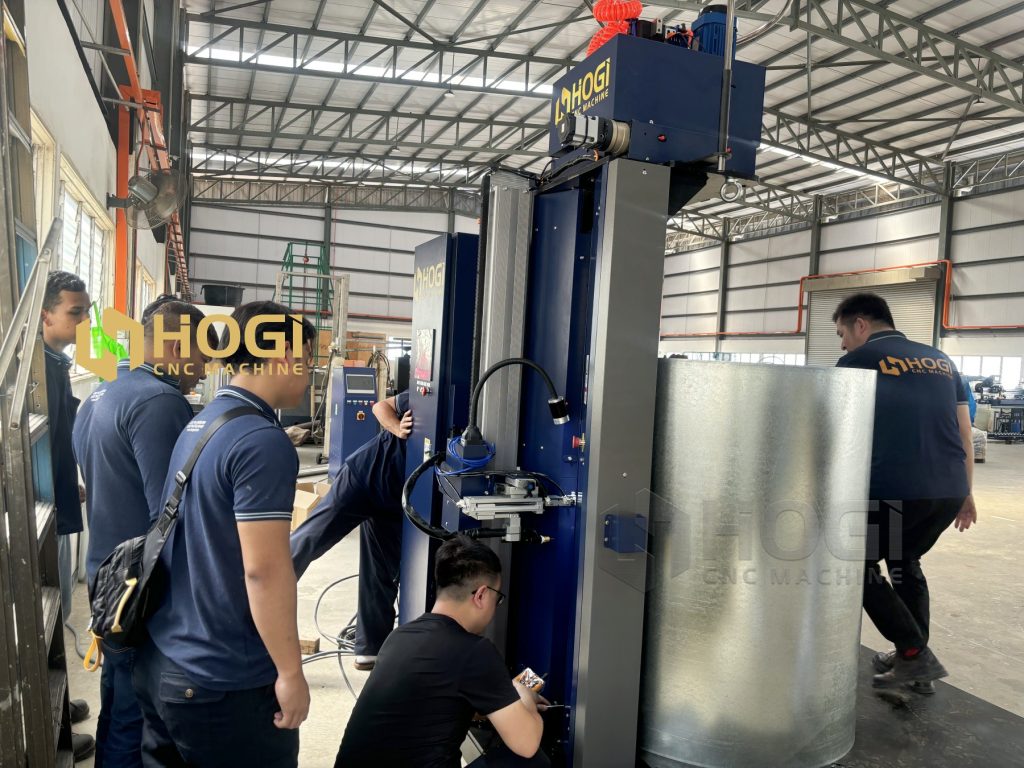
Common Weld Quality Problems and Their Causes
Weld quality problems are often the first sign that something is wrong with the machine, the process or the workpiece preparation. Understanding the root cause helps to avoid unnecessary adjustments and repeated rework.
Weld Deformation and Distortion
Excessive deformation is a frequent issue when welding thin-walled cylinders or flat plates.
- Too high heat input: increasing current or reducing speed too much can cause local overheating.
- Insufficient copper backing: missing or worn copper plates reduce heat absorption and support.
- Improper clamping: workpiece not firmly held can shift under thermal load, leading to distortion.
To reduce deformation, check the heat input parameters, verify the condition of copper backing and ensure the workpiece is clamped firmly and aligned correctly before starting the weld.
Uneven Seam Appearance and Penetration
Uneven weld appearance, such as waviness, undercut or irregular penetration, usually points to torch alignment or process instability.
- Torch offset: the torch is not exactly over the seam, causing one side to be deeper than the other.
- Incorrect torch gap: too large or too small gap between torch and workpiece affects arc stability.
- Fluctuating power source: unstable current or voltage can cause inconsistent penetration.
Check the positioning and centering device, recalibrate the torch gap and verify that the power source parameters are stable and consistent with the material and thickness.
Porosity and Lack of Fusion
Porosity (small holes) and lack of fusion are common in stainless and galvanized sheets if shielding gas or surface preparation is not adequate.
- Insufficient shielding gas: low flow rate or leaks in the gas line can cause poor protection.
- Contaminated surface: oil, rust or dust on the seam can introduce gases into the weld pool.
- Incorrect gas type: using the wrong type or purity of argon can affect weld quality.
Clean the workpiece surface before welding, check the gas flow rate and ensure the gas line is sealed and the argon purity meets the required standard (typically 99.99%).
Motion, Positioning and Control Issues
Motion and control problems often show up as seam offset, inconsistent travel speed or error messages on the control panel. These issues can affect both weld quality and production efficiency.
Seam Offset and Poor Positioning
If the weld seam is not straight or deviates from the intended path, positioning and clamping are usually the cause.
- External positioning device misalignment: the centering device is not correctly set for the workpiece diameter.
- Worn guides or ball screws: TBI linear guides and ball screws with excessive wear can cause uneven movement.
- Loose clamping: workpiece not firmly held can shift during welding.
Realign the positioning and centering device, inspect the guides and ball screws for wear and ensure the workpiece is clamped securely before starting the weld.
Unstable Torch Travel Speed
Unstable torch speed can lead to inconsistent penetration and uneven weld appearance.
- Pneumatic clutch issues: the clutch may not engage or disengage smoothly, causing speed fluctuations.
- Motor or drive problems: motor performance or drive settings may be incorrect.
- PLC parameter errors: incorrect speed settings in the program can cause unstable travel.
Check the pneumatic clutch mechanism, verify the motor and drive settings and review the PLC program parameters to ensure the travel speed is set correctly and consistently.
PLC Control and Program Errors
PLC control errors can range from minor warnings to complete system stoppage, depending on the issue.
- Program loss or corruption: power interruptions or software issues can cause program loss.
- Sensor faults: faulty sensors can send incorrect signals to the PLC.
- Communication errors: problems with the communication between PLC and power source can cause errors.
Restore the program from backup, check the sensors and their connections and verify the communication settings between the PLC and the power source to ensure stable operation.
Auxiliary Devices and Electrical System Maintenance
Auxiliary devices and the electrical system play a critical role in maintaining weld quality and machine stability. Regular maintenance of these components helps prevent unexpected failures.
Copper Backing and Airbag Compression
Copper backing and airbag compression devices are essential for controlling heat and deformation.
- Copper plate wear: worn or damaged copper plates reduce heat absorption and support.
- Airbag leakage: leaking airbags can cause inconsistent compression and poor weld quality.
- Dirty surfaces: debris or weld spatter on copper plates can affect thermal conductivity.
Inspect the copper plates regularly, replace worn or damaged plates and clean the surfaces to ensure good thermal conductivity. Check the airbags for leaks and replace them if necessary.
Electrical Connections and Components
Electrical connections and components must be kept clean and secure to ensure stable operation.
- Loose connections: loose electrical connections can cause intermittent faults or power loss.
- Dust and contamination: dust and contamination can affect the performance of electrical components.
- Component aging: relays, contactors and other components may age over time and need replacement.
Check all electrical connections for tightness, clean the electrical components and replace aging components regularly to ensure stable operation and prevent unexpected failures.
Routine Maintenance Plan for Longitudinal Seam Welders
A structured maintenance plan helps to prevent issues and keep the machine running smoothly. The plan should be adapted to the specific usage and environment of the machine.
Daily Maintenance Tasks
Daily tasks focus on basic checks and cleaning to ensure the machine is ready for operation.
- Clean the work area and remove debris or weld spatter.
- Check the gas flow rate and ensure the gas line is sealed.
- Inspect the torch and replace the tungsten electrode if worn.
These tasks help to maintain a clean and safe working environment and ensure the machine is ready for operation.
Weekly and Monthly Maintenance Tasks
Weekly and monthly tasks focus on more detailed inspections and adjustments to maintain machine performance.
- Lubricate the guides and ball screws to ensure smooth movement.
- Check the positioning and centering device for alignment.
- Inspect the electrical components and replace any worn or damaged parts.
These tasks help to maintain the machine’s performance and prevent unexpected failures.
Annual Maintenance and Calibration
Annual tasks focus on comprehensive inspections and calibration to ensure the machine is operating within specifications.
- Calibrate the positioning and control system to ensure accurate movement.
- Inspect the motor and drive system for wear and replace any worn parts.
- Perform a full system check and update the software if necessary.
These tasks help to ensure the machine is operating within specifications and prevent unexpected failures.
Case Study: Stainless Chimney Producer in Indonesia
A stainless chimney producer in Indonesia faced frequent weld defects and control errors on their longitudinal seam welding machine after a year of high-volume production.
Background: The factory produced stainless chimneys for commercial buildings. Weld defects such as porosity and uneven penetration led to customer complaints and rework.
Solution: They implemented a structured maintenance plan, including daily cleaning, weekly lubrication and annual calibration. They also replaced worn copper plates and checked the gas flow rate and electrical connections.
Result: Weld defects decreased significantly, and control errors were reduced. The machine operated more smoothly, and production efficiency improved.
This case shows how a well-planned maintenance approach can help to maintain weld quality and machine performance over time.
Client Testimonial: Duct and Tank Fabricator in Vietnam
A duct and tank fabricator in Vietnam shared their experience after implementing a routine maintenance plan for their longitudinal seam welding machine.
They reported that the machine operated more smoothly and weld quality improved significantly. The structured maintenance plan helped to prevent unexpected failures and reduce downtime. For a factory with limited maintenance staff, this approach helped to maintain machine performance and weld quality without increasing labor cost.
FAQs: Common Questions About Longitudinal Seam Welding Machine Troubleshooting and Maintenance
1. What are the most common weld defects on a longitudinal seam welder?
The most common weld defects include deformation, uneven seam appearance, porosity and lack of fusion. These issues are often related to heat input, torch alignment, shielding gas and surface preparation.
2. How do I troubleshoot seam offset or poor positioning?
To troubleshoot seam offset, check the positioning and centering device, inspect the guides and ball screws for wear and ensure the workpiece is clamped securely before starting the weld.
3. What is the recommended maintenance frequency for a longitudinal seam welder?
A recommended maintenance frequency includes daily tasks (cleaning, gas check), weekly and monthly tasks (lubrication, alignment) and annual tasks (calibration, full system check).
4. How does maintenance affect weld quality?
Regular maintenance helps to prevent issues and keep the machine running smoothly, which in turn maintains weld quality and reduces rework.
5. How does troubleshooting and maintenance relate to machine selection?
The type of control system, transmission method and welding process you choose will influence the maintenance strategy. For example, a PLC-controlled system with TBI linear guides and ball screws requires regular lubrication and periodic inspection, but has fewer complex hydraulic components. If you want to learn more about how to select the right machine for your application, you can read the article on how to choose a longitudinal seam welding machine for tanks and ducts.
Recommended Company: HOGI Longitudinal Seam Welding Machine Solutions
HOGI designs longitudinal seam welding machines with a focus on reliability, ease of maintenance and long-term stability. Their machines feature a rigid one-piece spindle assembly, TBI linear guides and ball screws, and PLC-controlled single-axis motion, with options for TIG, MAG or laser sources to match different materials and production requirements.
For factories that need stable, repeatable welds on tanks, ducts, chimneys and cylindrical fabrication, HOGI’s longitudinal seam welding platform offers a balanced combination of mechanical precision, control stability and process flexibility. The company also provides on-site installation, operator training and after-sales support, which is important for long-term stability of the equipment and effective troubleshooting and maintenance.
Authoritative Sources
“Welding Handbook, Volume 3: Welding Inspection and Quality Control”
https://www.aws.org/welding-handbook-quality
“Maintenance and Reliability of Welding Equipment”
https://www.sciencedirect.com/welding-maintenance
“Industrial Welding Systems: Design, Operation and Maintenance”
https://www.elsevier.com/industrial-welding-systems
“Welding Defects and Their Prevention”
https://www.taylorfrancis.com/welding-defects
“Practical Guide to Welding Quality Control”